By [Staff Writer]
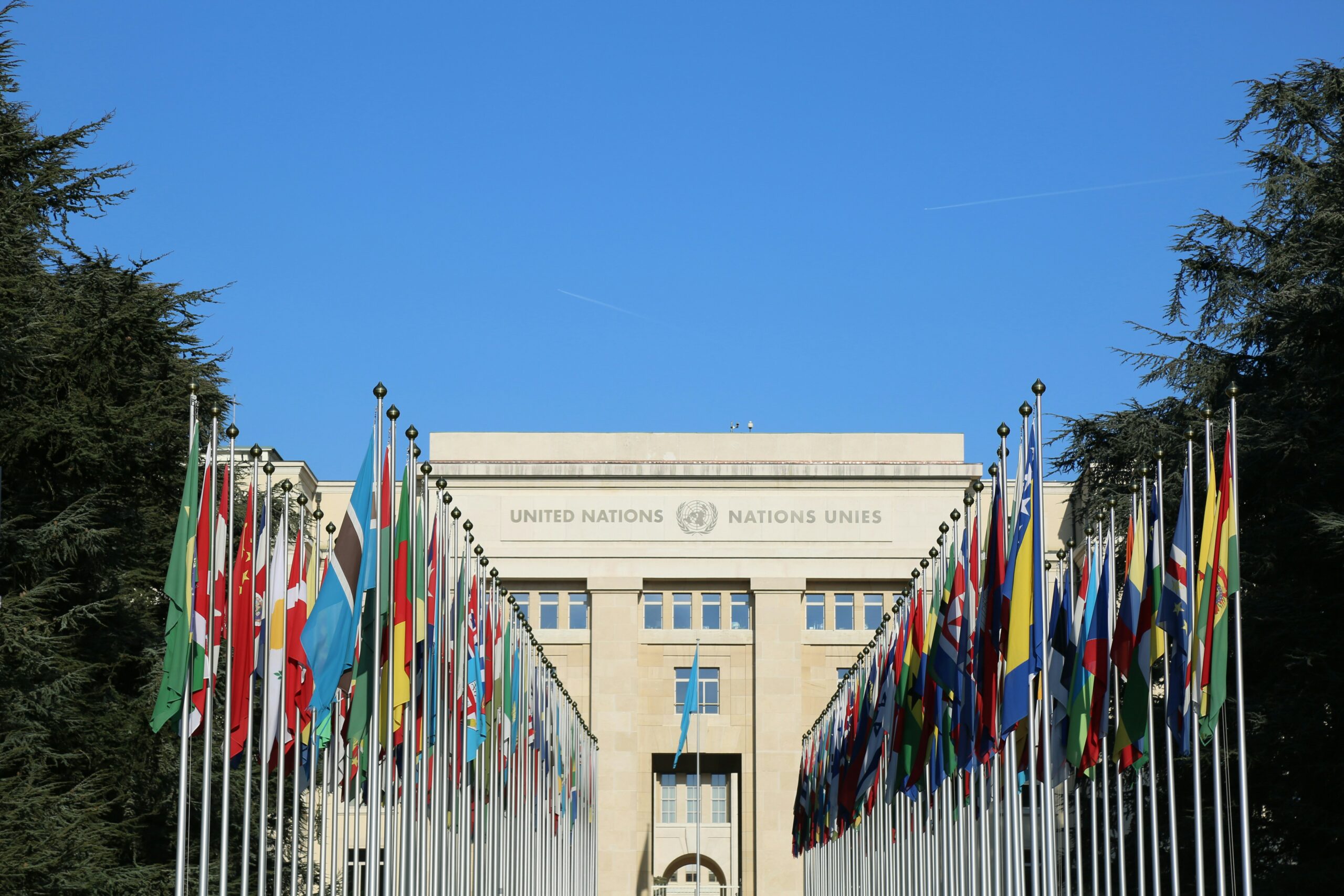
Lede: World leaders on Friday concluded a landmark climate summit in Geneva, Switzerland, with a binding agreement to slash greenhouse gas emissions by 60% by 2035, marking the most ambitious collective target ever set. The deal, reached after two weeks of tense negotiations, commits 197 nations to a legally enforceable framework that includes financial penalties for non-compliance and a $500 billion annual fund to aid developing countries in their energy transition.
Background: A Summit Forged in Crisis
The summit, officially titled the Global Climate Action Forum, convened against a backdrop of record-breaking heatwaves, devastating floods, and mounting scientific warnings. The Intergovernmental Panel on Climate Change (IPCC) had recently released a report stating that the world had less than a decade to avert catastrophic warming. This urgency propelled negotiators from major emitters—including the United States, China, and the European Union—to move beyond voluntary pledges and toward a binding mechanism.
The final text, hammered out over 72 hours of continuous talks, replaces the non-binding “nationally determined contributions” of the Paris Agreement with a universal, legally mandated emissions reduction schedule. Under the new framework, each nation must submit a verified annual progress report to a newly created Global Climate Compliance Council, which will have the authority to impose trade sanctions on repeat violators.
Key Provisions of the Accord
The agreement, formally titled the Geneva Climate Compact, contains several groundbreaking elements:
- Emissions Target: A mandatory 60% reduction in greenhouse gases from 2020 levels by 2035, with an interim goal of 30% by 2030.
- Financial Mechanism: A $500 billion annual “Green Transition Fund” financed by a levy on international shipping, aviation, and fossil fuel extraction profits.
- Compliance: A tiered penalty system that begins with public censure and escalates to tariffs on exports from non-compliant nations.
- Technology Transfer: A mandate for wealthy nations to share carbon-capture and renewable energy technologies with developing countries at no cost.
Voices from the Floor
“This is not a perfect deal, but it is a necessary one,” said Dr. Amina Ouedraogo, the lead climate negotiator for the African Union, during the closing press conference. “For too long, the burden of climate change has fallen on those who contributed least to it. This compact finally acknowledges that historical responsibility.”
The sentiment was echoed by U.S. Special Envoy for Climate, James Carter, who called the agreement “a turning point in human history.” He added, “We are no longer asking for promises. We are building a system of accountability.”
However, the deal was not without its critics. Representatives from several oil-producing nations walked out of the final session, arguing that the targets were economically unfeasible. “You cannot legislate away geography or geology,” said Saudi Energy Minister Khalid Al-Faisal. “This agreement punishes nations for their natural resources.”
The Human Cost of Delay
For communities already on the front lines, the accord offers a fragile hope. In the low-lying island nation of Kiribati, rising sea levels have already swallowed two uninhabited islets and threaten the main population centers. “Every year we wait, we lose land,” said Kiribati delegate Maria Tion. “This agreement gives my grandchildren a chance to have a country to call home.”
The World Health Organization estimates that climate-related health crises—from heatstroke to vector-borne diseases—already claim 150,000 lives annually. The new fund is expected to allocate a portion of its resources to climate-resilient healthcare infrastructure in vulnerable regions.
Economic and Political Implications
The compact’s enforcement mechanism is its most controversial feature. Economists project that the trade sanctions could cost non-compliant nations up to 2% of their GDP annually. The European Union has already signaled its willingness to implement carbon border adjustment taxes, a move that could reshape global supply chains.
“This is the first time the international community has attached real teeth to climate promises,” said Dr. Helena Richter, an environmental policy expert at the London School of Economics. “The question is whether the political will to enforce these penalties will survive the next election cycle.”
The agreement also includes a “just transition” clause, requiring nations to provide retraining programs for workers in fossil fuel industries. The International Labour Organization estimates that 18 million jobs could be created in renewable energy sectors by 2030, offsetting potential losses in coal and oil.
Reactions and Roadblocks
Environmental groups offered cautious praise. Greenpeace International called the compact “a historic step forward,” but warned that the 60% target still falls short of the 70% reduction scientists say is needed to limit warming to 1.5 degrees Celsius. “This is a floor, not a ceiling,” said executive director Ravi Patel. “We will hold every government accountable to exceed these numbers.”
Industry leaders expressed mixed reactions. The CEO of a major European automaker, speaking on condition of anonymity, said the transition timeline was “aggressive but achievable,” noting that electric vehicle sales already account for 25% of new car purchases in the EU. Conversely, the American Petroleum Institute issued a statement calling the penalties “a recipe for economic disruption” and warning of potential energy price spikes.
What Comes Next
The compact will enter into force on January 1, 2026, after ratification by at least 55 nations representing 55% of global emissions. The first compliance review is scheduled for 2028. In the interim, a “Climate Action Accelerator” program will provide $50 billion in grants to help the poorest nations build renewable energy grids.
For the average citizen, the agreement may translate into tangible changes. Governments are expected to phase out subsidies for fossil fuels, expand public transit, and mandate energy-efficient building codes. Consumers in signatory nations may see higher costs for gasoline and air travel, offset by tax credits for solar panels and electric vehicles.
Broader Impact: A New Era of Accountability
The Geneva Compact represents a fundamental shift in international environmental law. Unlike the Paris Agreement, which relied on voluntary national pledges, this treaty creates a supranational enforcement body with real economic leverage. Legal scholars note that it could serve as a model for future global cooperation on issues like biodiversity loss and plastic pollution.
Yet, implementation remains the greatest challenge. The United States, which has a history of withdrawing from climate accords, faces a domestic political battle. The Senate must ratify the treaty by a two-thirds majority, a hurdle that appears steep given current partisan divisions. China, meanwhile, has pledged to meet its targets but has not yet detailed how it will phase out coal, which still provides 60% of its electricity.
What This Means for You
For individuals, the compact signals a rapid acceleration of green policies already underway in many nations. Homeowners in Europe and North America can expect expanded subsidies for heat pumps and solar installations. In developing nations, the Green Transition Fund will finance microgrids and clean cooking stoves, directly improving air quality for an estimated 2 billion people.
The agreement also includes a “Climate Resilience” component, requiring cities to update infrastructure to withstand extreme weather. This means stronger building codes in flood-prone areas and expanded cooling centers in heat-vulnerable urban zones.
The Road Ahead
Ratification deadlines loom. The first major test will come in November, when the G20 summit in New Delhi will assess initial signatories. If the United States fails to ratify, the compact could still proceed with other major economies, but its global impact would be significantly diminished.
The Geneva Compact does not solve climate change overnight. It does, however, transform the conversation from aspiration to obligation. For the first time, a nation’s failure to act on emissions carries a price tag—and that price may be the most powerful motivator of all.
For further reading, see the IPCC’s Sixth Assessment Report and the full text of the Geneva Climate Compact at UNFCCC.int.