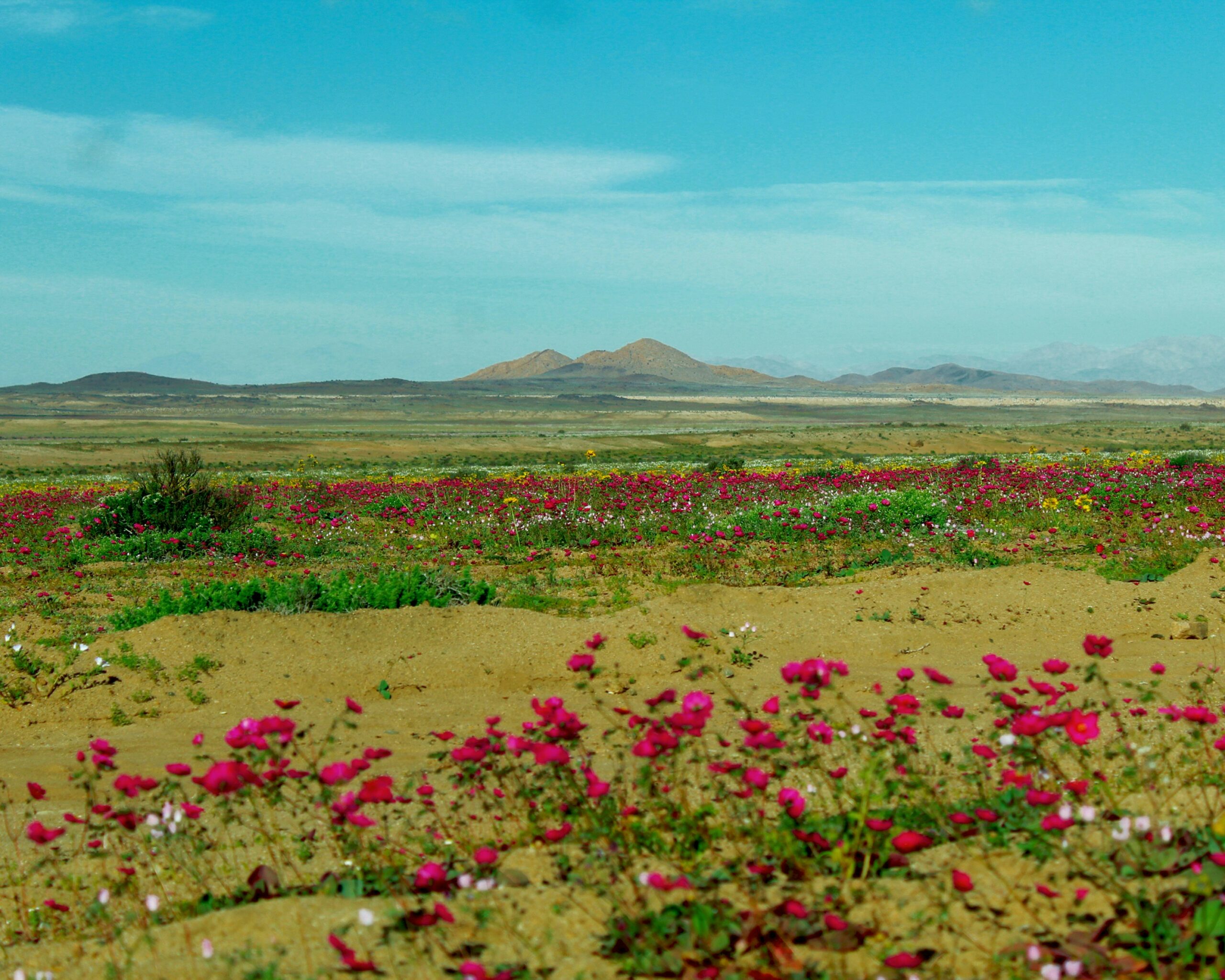
SANTIAGO, Chile — In the parched expanse of the Atacama Desert, where rain is measured in decades, a sudden and spectacular bloom of pink and violet flowers has emerged, surprising botanists and raising urgent questions about the impact of human-driven climate change on the world’s driest non-polar desert.
The phenomenon, known locally as desierto florido or “flowering desert,” unfolded between August and October in northern Chile’s Atacama Region. Normally, this once-in-a-decade event occurs when El Niño-driven rainfall awakens dormant seeds buried in the sand. This year, however, the bloom arrived after an unseasonal storm system—linked to shifting global weather patterns—delivered roughly 40 millimeters of precipitation in a region that averages less than 1 millimeter annually.
Dr. Marisol Peña, a botanist at the University of La Serena who has studied the Atacama for fifteen years, described the event as both beautiful and troubling. “We are seeing flowers that shouldn’t be here this often,” she said. “When a system designed for rare rains gets triggered repeatedly, it forces the plants to exhaust their seed bank reserves. This is not a sign of a healthy desert; it is a sign of a system under stress.”
The bloom covered roughly 2,000 hectares around the coastal town of Caldera, featuring more than 200 species, including the flame-colored Cistanthe longiscapa and the violet Nolana paradoxa. While the spectacle drew thousands of tourists, scientists warn that such frequent flowering could actually harm the ecosystem. Native plants, having evolved to germinate only once every five to ten years, risk depleting their underground seed stores if forced to bloom annually.
Desierto florido is now being studied by the Chilean Meteorological Office and the University of Chile as a potential biological indicator of accelerated climate change. Preliminary data from the National Oceanic and Atmospheric Administration (NOAA) indicates that sea surface temperatures off the Chilean coast have risen 1.5°C above the 20th-century average over the past three years, a shift that meteorologists link to more frequent and intense coastal fog and isolated rain events.
“The desert is sending us a message,” said Dr. Fernando Herrera, a climatologist at the University of Concepción. “What was once a rare ecological marvel is becoming a regular occurrence. If these trends continue, we may lose the very species that make the Atacama unique.”
The implications extend beyond botany. The Atacama’s unique microbial life, studied by NASA as a Mars analogue, could also be disrupted by altering moisture levels. Additionally, the surge in tourism during flowering events places pressure on local water supplies and fragile soil crusts that take centuries to regenerate.
For now, Chilean parks officials are urging visitors to stay on designated paths and avoid picking flowers. Scientists are calling for a national monitoring program to track seed bank health and soil moisture levels across the desert’s hyper-arid core.
Related reading: “The Atacama: A Climate Warning,” a report from the Chilean Ministry of Environment (2023); “How El Niño Is Changing,” a joint study by NOAA and the University of Chile (2024).
What you can do: If you visit the Atacama, respect all park signage. Support research organizations like the Chilean Botanical Society, which is collecting data on how desert flora respond to shifting rainfall patterns. Understanding these flowers may help us predict how other fragile ecosystems—from alpine meadows to tundra—will react in a warming world.