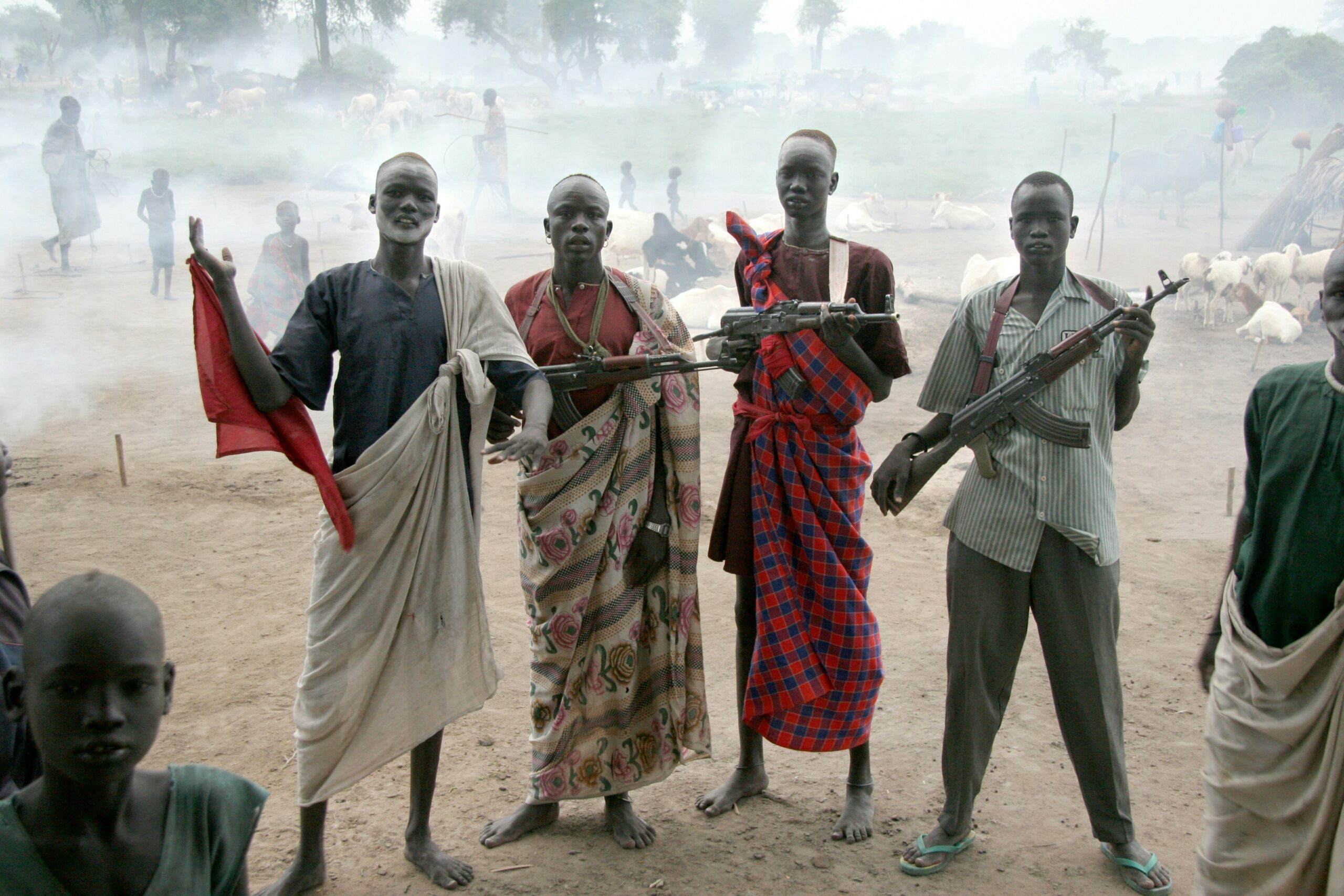
GENEVA — International donors have pledged $2.1 billion in emergency aid to address a rapidly escalating famine in Sudan, where nearly half the population faces acute hunger following 14 months of brutal civil war. The announcement, made Monday at a high-level humanitarian conference in Geneva, marks the largest single funding commitment for the crisis but still falls short of the $2.7 billion the United Nations says is urgently needed.
The conflict between the Sudanese Armed Forces (SAF) and the paramilitary Rapid Support Forces (RSF) has devastated the country since April 2023, displacing over 10 million people and crippling agricultural production. The UN’s World Food Programme (WFP) now warns that 755,000 people are experiencing catastrophic hunger—the highest level of food insecurity—with entire communities in Darfur, Kordofan, and Khartoum facing starvation.
“We are witnessing a man-made famine of staggering proportions,” said Martin Griffiths, the UN Under-Secretary-General for Humanitarian Affairs, in a statement. “Children are dying from malnutrition in areas where aid cannot reach because of active fighting and bureaucratic obstruction. This pledge is a lifeline, but it must be followed by unimpeded humanitarian access.”
The conference, co-hosted by Switzerland, the European Union, and the United Nations, drew representatives from 50 nations. The largest contributions came from the United States ($500 million), the European Commission ($400 million), and the United Kingdom ($150 million). Saudi Arabia, Qatar, and the United Arab Emirates collectively pledged $300 million.
A Crisis of Access, Not Just Funding
Despite the financial injection, aid agencies stress that money alone will not solve the crisis. The RSF controls much of the agricultural heartland, while the SAF restricts cross-border aid deliveries from Chad and South Sudan. Since the war began, over 20 humanitarian workers have been killed, and the UN reports that 90 percent of people in emergency-level hunger live in areas currently inaccessible to relief convoys.
“We have the food in warehouses in Port Sudan and in Chad. The problem is getting it to the people who are dying,” said Michael Dunford, WFP’s regional director for East Africa. “Every day of delay means more children lost to severe acute malnutrition.”
The Integrated Food Security Phase Classification (IPC)—the global standard for measuring hunger—declared famine conditions in at least five locations in North Darfur in August. The IPC projects that by September, 2.5 million people could face catastrophic food shortages, the highest number ever recorded in a single country.
Roots of the Catastrophe
The conflict erupted when tensions between SAF commander General Abdel Fattah al-Burhan and RSF leader Mohamed Hamdan Dagalo, known as Hemedti, over a planned transition to civilian rule turned violent. The fighting has destroyed markets, looted grain stores, and forced millions of farmers to abandon their fields. The war has also severed supply chains, causing food prices to spike by over 200 percent in some regions.
Compounding the crisis, the rainy season has begun, flooding roads and making many routes impassable for trucks. Médecins Sans Frontières (MSF) reports that its clinics in El Fasher and Nyala are overwhelmed, treating children with kwashiorkor and marasmus—severe forms of malnutrition rarely seen outside war zones.
“I walked for three days with my two youngest to reach a feeding center,” said Amina Hassan, a 34-year-old mother of five who fled her village in South Darfur. “We had nothing but sorghum leaves to eat. My three-year-old son weighs less than my dog did before the war.”
A Broken Food System
Before the conflict, Sudan was a regional breadbasket, producing enough sorghum, millet, and sesame to feed itself and export to neighbors. The war has shattered that system. The World Bank estimates that agricultural output has fallen by 60 percent, and livestock herds—a primary source of protein and income—have been decimated by looting and disease.
The IPC’s latest analysis, released last week, found that 8.5 million people are in emergency-level hunger (Phase 4), just one step below famine. Children under five are the most vulnerable: the UN children’s agency, UNICEF, reports that 700,000 children are suffering from severe acute malnutrition, a condition that can cause permanent developmental damage or death without treatment.
“This is not a slow-onset disaster. It is an acute emergency that demands an immediate, massive response,” said Dr. Tedros Adhanom Ghebreyesus, WHO Director-General. “We are seeing outbreaks of cholera, measles, and malaria in displacement camps where there is no clean water or sanitation.”
What the Pledges Will Fund
The new funding will be channeled through the UN’s 2024 Sudan Humanitarian Response Plan, which aims to reach 14.7 million people. Key priorities include:
- Emergency food distributions to 8 million people, including ready-to-use therapeutic foods for malnourished children.
- Nutrition treatment for 2.4 million children and pregnant or lactating women.
- Water, sanitation, and health services in displacement camps and hard-to-reach areas.
- Logistics support to repair roads and airdrop supplies into besieged zones.
However, the UN notes that only 30 percent of the required $2.7 billion has been funded so far this year. Monday’s pledges bring the total to roughly 78 percent, but past conferences have seen significant gaps between promises and actual disbursement.
Next Steps: Pressure and Accountability
Humanitarian organizations are now calling on both warring parties to honor international law by allowing safe passage for aid convoys. The UN Security Council is expected to vote this week on a resolution demanding an immediate ceasefire and the opening of humanitarian corridors from Chad, South Sudan, and Port Sudan.
“The world cannot claim it did not know,” said Jan Egeland, Secretary-General of the Norwegian Refugee Council. “We have the money. We have the food. What we lack is the political will to force the warring parties to stop using starvation as a weapon of war.”
For families like Amina Hassan’s, the pledges offer a fragile hope. But without a ceasefire and sustained access, the gap between promise and delivery will remain a matter of life and death. The UN warns that without immediate action, the death toll from hunger could surpass 2.5 million by the end of the year—a scale of suffering not seen since the Ethiopian famine of the 1980s.