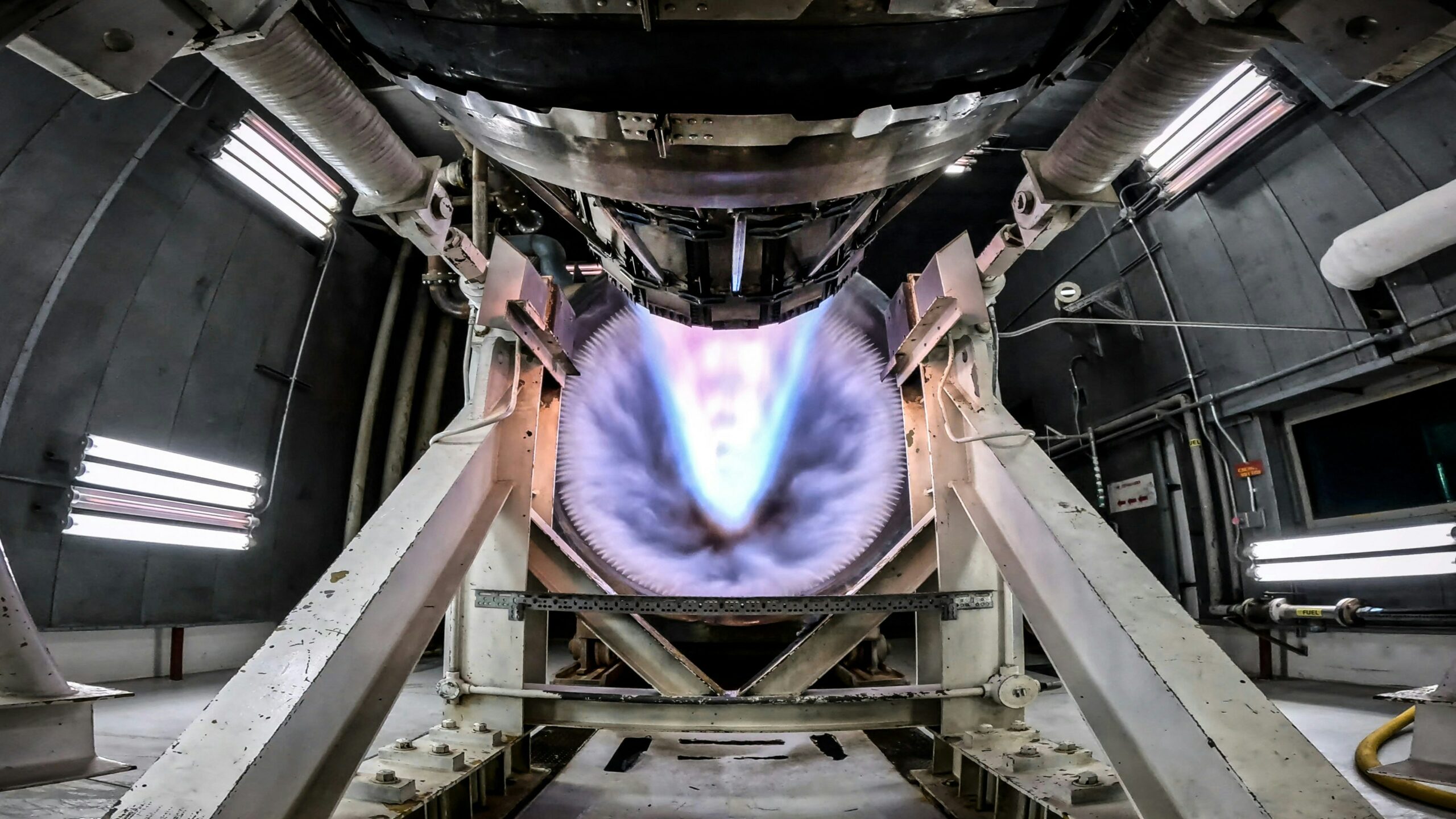
For decades, the dream of harnessing the power of the sun here on Earth has remained tantalizingly out of reach—a quest for a virtually limitless, carbon-free energy source. However, a significant milestone announced this week by scientists at the National Ignition Facility (NIF) in California has shifted the paradigm from theoretical possibility to tangible reality.
Researchers at the Lawrence Livermore National Laboratory confirmed that they have achieved net energy gain in a nuclear fusion reaction for the first time in history. This “ignition” event, as it is known in the field, marks a pivotal, though not final, step in the decades-long journey to commercial fusion power.
What Was Achieved and How It Works
The experiment, conducted on December 5, 2022, involved focusing 192 of the world’s most powerful laser beams onto a tiny, gold-plated cylinder containing a frozen pellet of hydrogen isotopes—deuterium and tritium—roughly the size of a peppercorn. The lasers, firing a remarkable 2.05 megajoules of energy, created incredibly intense heat and pressure, mimicking the conditions at the core of a star.
The resulting implosion caused the hydrogen atoms to fuse, releasing a burst of energy. Crucially, this output—3.15 megajoules—was more than the energy that went into the laser itself, a condition known in fusion science as “scientific breakeven.”
Dr. Kim Budil, Director of the Lawrence Livermore National Laboratory, described the moment of success with palpable emotion.
“It’s a testament to the incredible persistence, ingenuity, and dedication of this team,” Dr. Budil said during a press conference. “This is a once-in-a-lifetime achievement. It’s moving the dial from ‘if’ to ‘when’.”
The Critical Distinction: Scientific vs. Commercial Power
While the achievement is a watershed moment, experts are quick to temper expectations of a quick fix for the climate crisis. The reaction itself lasted only a few billionths of a second and, when considering the vast amount of electricity required to power the lasers—which is far greater than the laser energy alone—the process is not yet a practical source of power.
Fusion energy operates on a different principle than fission, the process used in today’s nuclear power plants. Fission splits heavy atoms, producing long-lived radioactive waste and carries the risk of a meltdown. Fusion, conversely, combines light atoms, produces no long-term radioactive waste, and cannot run away in a catastrophic chain reaction. The fuel—hydrogen—is also abundant in seawater.
For decades, the NIF’s primary mission was not power generation but stockpile stewardship—simulating nuclear warhead performance without live testing. This fusion breakthrough was a byproduct of that national security mission.
What This Means for the Future of Energy
The primary takeaway for the public is profound, even if the timeline is long. Industry experts now believe that the fundamental physics barrier has been broken.
Dr. Tony Roulstone, a nuclear energy expert from the University of Cambridge, stated that the result “confirms that the basic physics is right.” He added, however, that the path to a commercial reactor still requires solving immense engineering challenges, including creating lasers that can fire many times per second and developing materials that can withstand the intense heat of repeated fusion reactions.
Private sector efforts are also accelerating. Companies like Commonwealth Fusion Systems and TAE Technologies are racing to build smaller, more efficient reactors using different methods, such as powerful magnetic fields. They have also attracted billions of dollars in investment.
The Broader Impact
The economic and environmental implications of a successful fusion future are staggering. A single gram of fusion fuel could produce as much energy as 11 tons of coal—without the carbon emissions or the air pollution that causes millions of premature deaths annually.
This breakthrough serves as a crucial proof of concept. It provides a concrete, verifiable data point that moves the technology from the realm of science fiction into the realm of engineering reality.
Next Steps: The immediate focus for the NIF and other labs will be on improving the efficiency of the “gain” factor—getting more energy out per unit of laser energy in. The broader scientific community now expects a significant acceleration in private and public investment, aiming for a demonstration power plant within the next two to three decades.
For now, though, the world can pause and acknowledge that on a December morning in California, scientists finally created a miniature star and captured its fire.