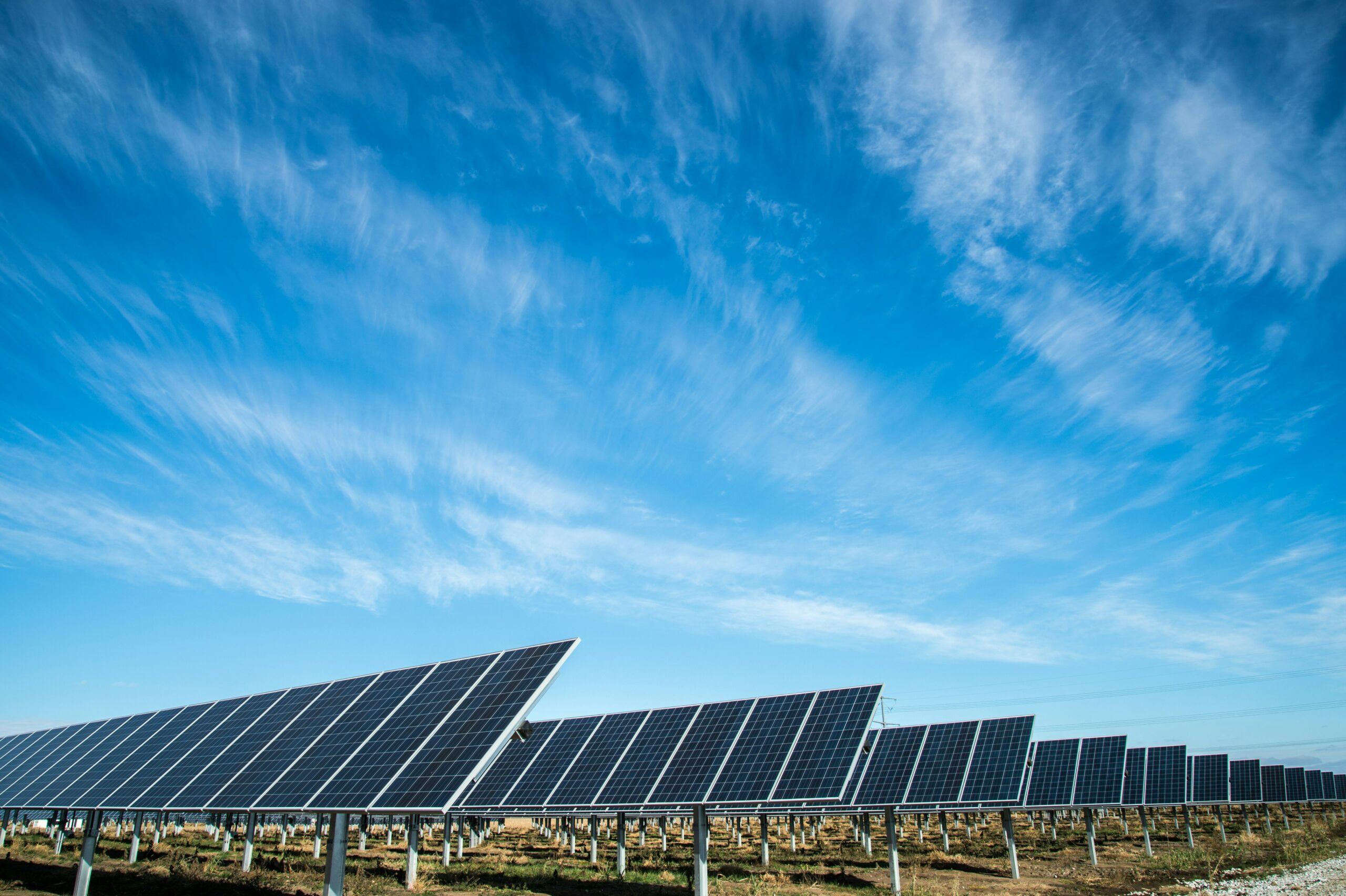
Renewable energy reached an unprecedented milestone this year as solar power became the fastest-growing source of electricity worldwide, according to new data released by the International Energy Agency. For the first time, solar photovoltaic installations are expected to account for more than half of all new power capacity added globally in 2024, signaling a decisive shift away from fossil fuels.
The landmark achievement, detailed in the IEA’s latest Renewables 2024 report, projects that global renewable energy capacity will increase by nearly 50% this year alone, with solar leading the charge. China, the United States, and India are the primary drivers, collectively installing enough solar panels to power more than 100 million homes annually. By year’s end, the world is on track to add over 500 gigawatts of renewable capacity—equivalent to the entire power grid of Germany and France combined.
“We are witnessing a transformation that is happening faster than almost anyone predicted,” said Dr. Fatih Birol, the IEA’s Executive Director. “Solar is now the cheapest form of electricity in many parts of the world, and its growth is accelerating because of policy support and falling costs.”
Why Solar Is Surging
Several factors have converged to propel solar to the forefront. The cost of manufacturing photovoltaic panels has dropped by roughly 80% over the past decade, driven by economies of scale in China, which now produces over 80% of the world’s solar components. Government incentives, such as the U.S. Inflation Reduction Act and the European Union’s Green Deal, have created stable investment environments. Meanwhile, corporate renewable energy purchases have doubled since 2020 as companies seek to meet net-zero commitments.
Efficiency improvements have also played a role. Modern solar cells convert more than 25% of sunlight into electricity—a near-doubling from models a decade ago—making installations viable in regions with less intense sunshine, including northern Europe and parts of Canada.
Challenges Remain Despite Record Growth
The rapid expansion, however, is not without hurdles. Grid infrastructure in many countries has not kept pace with generation capacity, leading to curtailment—where solar farms are intentionally shut down when supply outstrips demand. In California and parts of China, this problem has become increasingly common, wasting gigawatts of clean energy.
“Building more solar alone won’t solve the climate crisis if we can’t store or transmit the electricity it produces,” warned Dr. Maria van der Hoeven, a former IEA Executive Director and now an energy policy fellow at Oxford University. “We urgently need investment in battery storage and smart grid technology to balance supply and demand.”
Another concern is the geopolitical concentration of supply chains. With China dominating panel production, trade disputes and export restrictions could disrupt global deployment. The U.S. and EU are racing to build domestic manufacturing, but analysts caution that scaling up will take years.
Human Impact: Hope and Hardship
For families in rural Kenya, the solar boom has been life-changing. Mary Akinyi, a farmer in the Siaya region, purchased a rooftop solar home system two years ago. “Before, I spent hours collecting firewood and my children studied by candlelight,” she said. “Now we have lights all evening, I can charge my phone, and my daughter’s grades have improved.” Over 150 million households worldwide now have access to solar power, many for the first time.
Yet, the transition has also created disruption. Coal-mining communities in Germany’s Ruhr Valley and West Virginia, USA, face job losses as utilities retire fossil-fuel plants faster than new clean-energy jobs emerge. Just transition programs—retraining workers and investing in affected regions—remain underfunded globally.
What Comes Next
Looking ahead, the IEA predicts that by 2030, solar will surpass hydropower to become the world’s largest single source of electricity generation. For this to happen, governments must prioritize grid modernization, energy storage deployment, and equitable workforce policies. The International Renewable Energy Agency recommends that global investment in transmission lines and battery storage triple to $2.5 trillion annually by the end of the decade.
The record-breaking surge in solar power offers a clear message: the clean energy transition is no longer a future goal—it is today’s reality. The challenge now lies in managing its growing pains to ensure that the benefits are shared by everyone, not just the sunniest of locations.