Lede
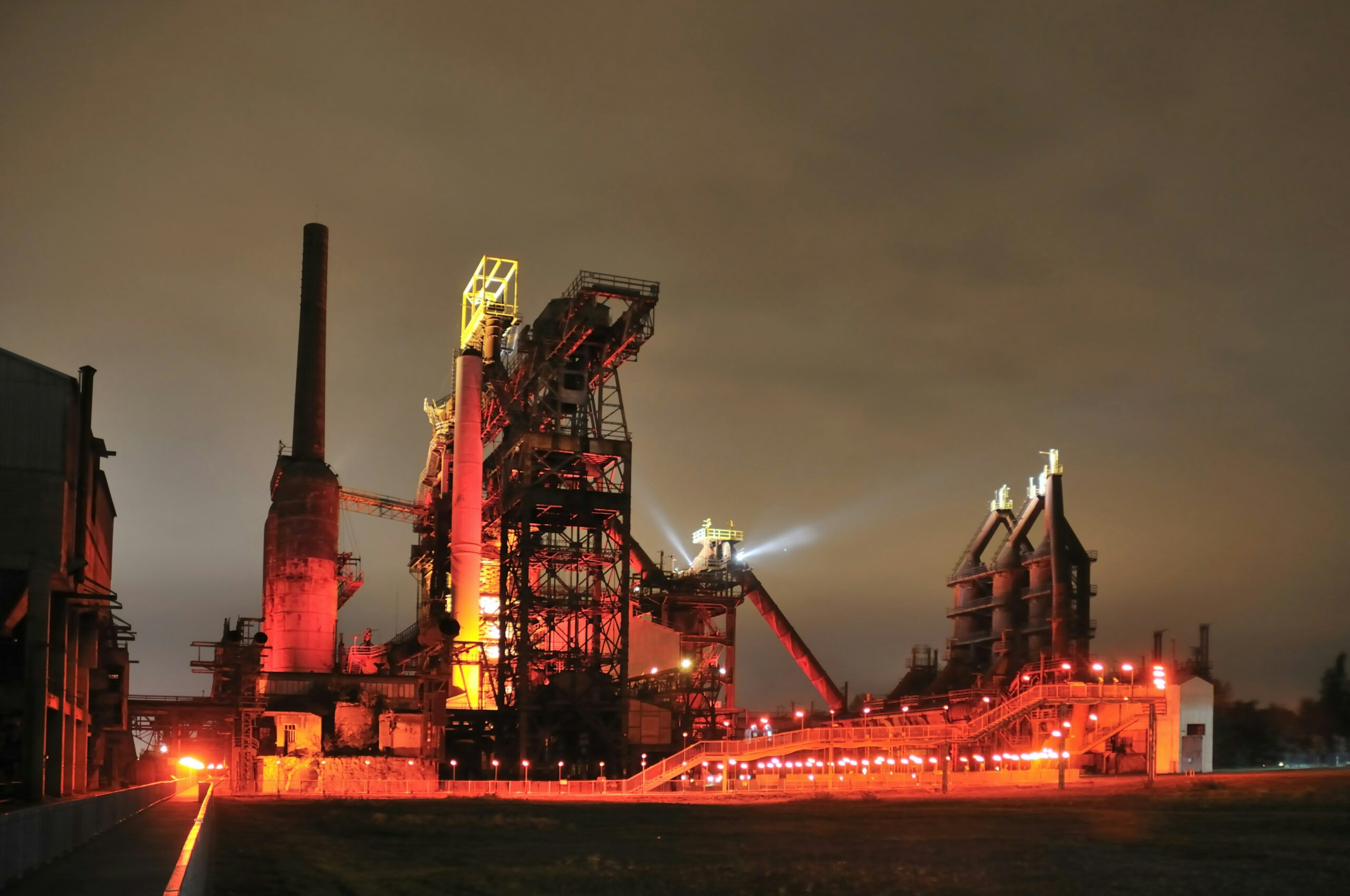
A quiet revolution is underway in the steel industry, one of the world’s largest sources of carbon emissions. As governments and corporations accelerate their pledges to reach net-zero emissions by mid-century, major steelmakers across Europe, Asia, and North America are racing to replace coal-fired blast furnaces with hydrogen-powered and electric production methods. But the transition from “gray” to “green” steel faces formidable obstacles: ballooning costs, uncertain supply chains for clean energy, and a fragmented global market that still favors cheap, carbon-intensive output.
The Scale of the Challenge
Steel production accounts for roughly 7 to 9 percent of global carbon dioxide emissions—more than the entire aviation industry combined. Traditional blast furnaces rely on coking coal both as a heat source and as a chemical agent to strip oxygen from iron ore. This process, unchanged in its fundamentals for over a century, releases CO₂ directly.
To decarbonize, the industry must shift to two primary alternatives: hydrogen direct reduction (H₂-DRI) , which uses green hydrogen instead of coal, and electric arc furnaces (EAFs) , which melt scrap steel using renewable electricity. Both methods can cut emissions by more than 90 percent—if the hydrogen or electricity comes from clean sources.
Swedish startup SSAB, in partnership with mining giant LKAB and energy firm Vattenfall, claims to have delivered the world’s first commercial shipment of fossil-free steel—produced using hydrogen—to Volvo in 2022. Ms. Elin Ledskog, sustainability director at SSAB, called the milestone “just the beginning,” noting that scaling up to full production would require massive investment in electrolyzers and renewable generation.
Economic Hurdles and Market Dynamics
Despite such breakthroughs, green steel currently costs 20 to 40 percent more to produce than conventional steel. Unlike solar panels or batteries, steel offers limited potential for dramatic cost reduction through miniaturization or efficiency gains, said Dr. Hiroshi Yamamoto, an industrial economist at the University of Tokyo. “You are still moving massive quantities of iron ore at high temperatures. The physics imposes a floor on energy consumption.”
This premium has prompted some governments to intervene. The European Union’s Carbon Border Adjustment Mechanism (CBAM) , which took effect in October 2023, will eventually impose tariffs on imported goods based on their embedded carbon. Starting with a transitional phase through 2025, CBAM aims to level the playing field for EU producers who face stricter climate rules. In the United States, the Inflation Reduction Act offers tax credits for clean hydrogen and carbon capture, which could lower green steel costs by up to 30 percent per ton.
Meanwhile, China—the world’s largest steel producer, accounting for more than half of global output—has yet to commit to a green steel timeline. It is investing heavily in carbon capture and storage (CCS) at existing blast furnaces, a technology many experts view as a bridge, not a solution.
Human and Environmental Impact
The transition is not only technological but deeply human. In the industrial Ruhr region of Germany, and in steel towns of Pennsylvania and South Korea, workers worry that hydrogen plants will employ far fewer people than the coal-powered mills they replace. Trade unions have called for government-backed “just transition” programs, including retraining and wage guarantees.
On the environmental side, reduced emissions bring local health benefits. A 2021 study in The Lancet Planetary Health estimated that greening steel production in India and China could prevent hundreds of thousands of premature deaths annually by lowering particulate pollution near steel towns.
What Comes Next
The next decade will be pivotal. Analysts at BloombergNEF project that green steel could become cost-competitive with conventional steel by 2030, provided that renewable energy prices continue to fall and carbon pricing mechanisms expand.
For buyers—from automakers to construction firms—the challenge lies in willingness to pay a premium today to secure supply of lower-emission materials. Some, like Swedish truckmaker Scania, have already committed to sourcing 100 percent fossil-free steel by 2030.
Bottom line: The race to produce green steel is no longer a question of if, but how fast the world can scale clean production—and who will bear the cost of making that change equitable and enduring.
Related reading: For those interested in deeper analysis, the World Steel Association publishes an annual Sustainability Indicators Report, and the International Energy Agency’s Net Zero by 2050 roadmap offers detailed sector-by-sector benchmarks.