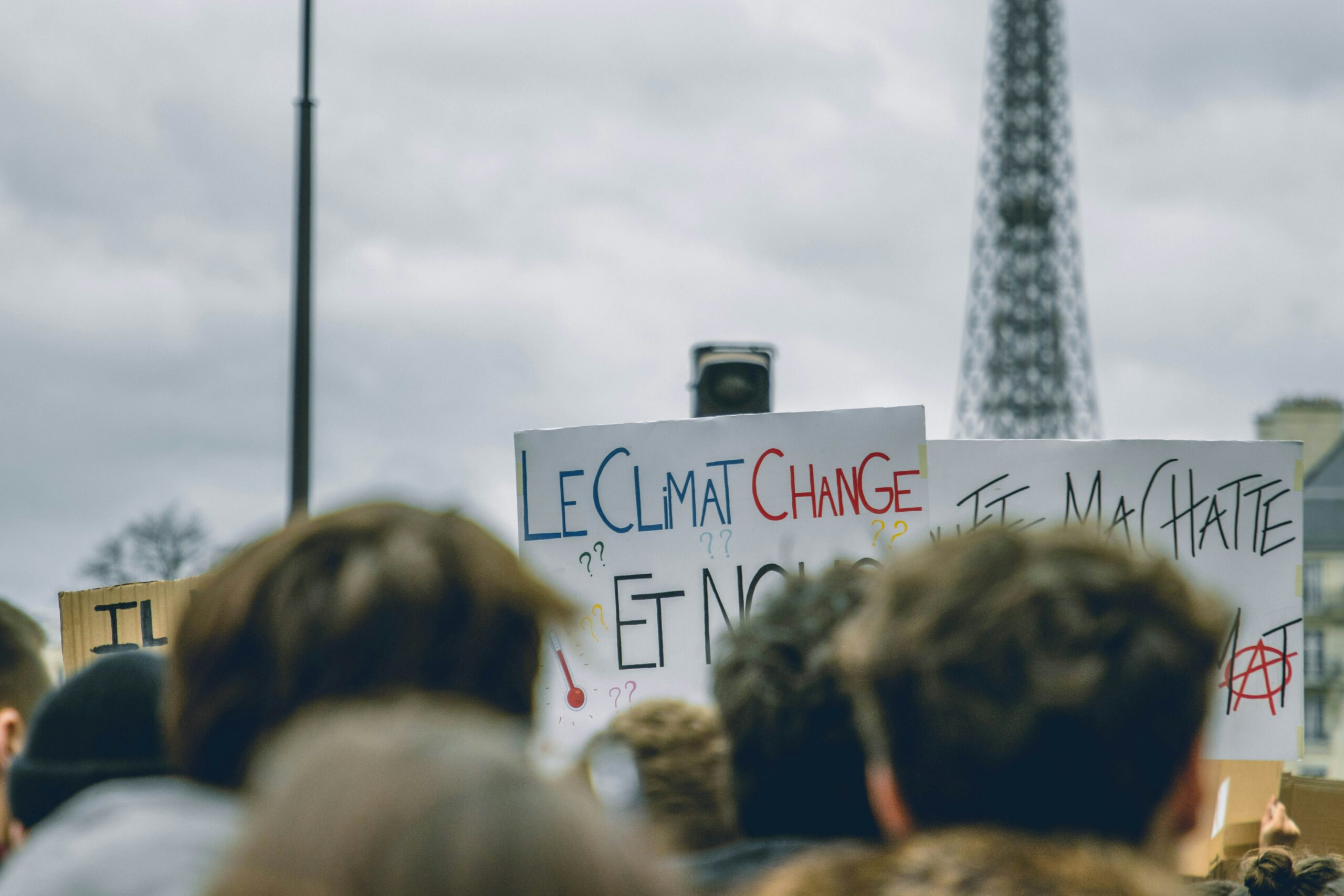
Paris, France – A landmark international summit concluded Thursday with world leaders committing to a radical acceleration of climate action, following the release of stark new data showing the planet is hurtling toward environmental tipping points faster than previously anticipated. The joint declaration, signed by representatives from over 190 nations, outlines a binding framework to slash greenhouse gas emissions by 60% before 2035, a target scientists say is the last viable window to avert catastrophic warming.
The announcement came on the final day of the two-week Global Climate Forum in Paris, where negotiators had been deadlocked over financing and accountability. The breakthrough was precipitated by a newly published report from the Intergovernmental Panel on Climate Change (IPCC), which concluded that current global policies would lead to a 3.2-degree Celsius temperature rise by the century’s end—far exceeding the 1.5-degree limit deemed safe.
“This is not a moment for incremental steps,” said UN Secretary-General António Guterres in his closing address. “The science is a siren. Either we answer with transformational action, or we abandon future generations to a world of fire, flood, and famine.” His remarks echoed the urgency of the report, which highlighted that Arctic summer sea ice is now projected to vanish entirely by the 2030s, a full decade earlier than previous estimates.
The accord, formalized as the Paris Acceleration Pact, includes three primary pillars. First, signatories agreed to phase out unabated coal power by 2040 for developed nations and by 2050 for developing economies. Second, a new $1.2 trillion annual “Green Resilience Fund” was established to help vulnerable nations adapt to sea-level rise and extreme weather. Third, nations committed to binding five-year progress reviews, a mechanism designed to prevent the delays that have plagued the original 2015 Paris Agreement.
“The devil will be in the enforcement,” cautioned Dr. Lena Novotny, a climate policy expert at the University of Oxford. “Previous pledges have been aspirational. This framework, for the first time, ties funding and trade incentives to compliance. If a country misses its target, its access to the resilience fund is reduced. That is a powerful lever.”
Human Cost in the Crosshairs
The urgency of the pact was underscored by stories from frontline communities. Fatima Diallo, a farmer from Senegal’s drought-stricken Sahel region, traveled to Paris to share her testimony. “We used to know when to plant and when to harvest,” she told delegates. “Now the rains come without warning, or they don’t come at all. We are not just losing crops; we are losing our way of life.” Her story, and others like it, provided a human counterpoint to the dense technical charts of the IPCC report.
However, the pact does not come without controversy. Major fossil-fuel-producing nations, including Saudi Arabia and Russia, initially resisted the language on coal and gas phase-outs, only conceding after securing a “transitional technology” clause that allows continued investment in carbon capture and storage. Environmental groups have criticized this as a loophole that could prolong the fossil fuel era.
“This is a step forward, but it is not a leap,” said Mikaela Reyes, director of the Climate Action Network. “Without a hard ban on new oil and gas exploration, we are simply rearranging deck chairs on a sinking ship.”
What Happens Next?
Implementation will be the true test. The pact requires ratification by national parliaments within the next 18 months. Eyes will turn to the United States and China, the world’s two largest emitters, to lead the way. President Joe Biden’s administration has already pledged to seek congressional approval for a doubling of renewable energy subsidies, while China’s President Xi Jinping announced a national emissions trading system expansion.
For the average person, the implications are twofold. On one hand, the pact signals that governments will accelerate the transition to electric vehicles and clean electricity, which could lower long-term energy costs. On the other, it means that industries reliant on fossil fuels—and the jobs tied to them—face a rapid and uncomfortable overhaul. The fund includes a $200 billion “Just Transition” package specifically to retrain coal workers and diversify oil-dependent economies.
As the delegates packed their briefcases and the lights dimmed on the summit hall, the mood was a mix of cautious optimism and grim resolve. The Earth’s deadline is not a political calendar, and as the latest data shows, it is moving closer every day. The world has now signed a check—but whether it can cash it remains the most pressing question of our time.
For further reading: Explore the IPCC’s Sixth Assessment Report summary, or listen to the BBC podcast ‘The Climate Question’ for expert analysis on energy transition pathways.