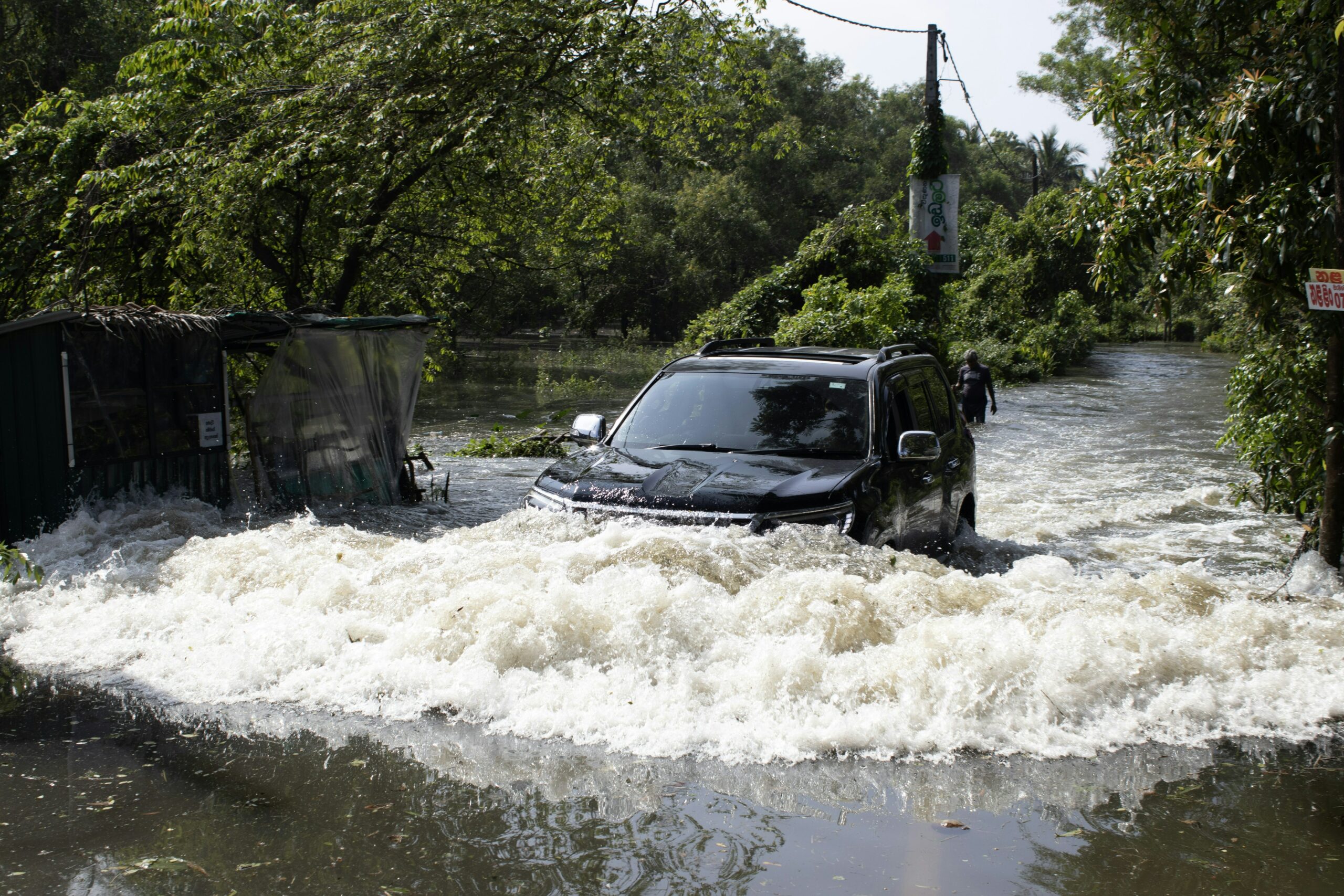
Lede
A new wave of artificial intelligence tools is revolutionizing climate science, enabling researchers to predict extreme weather events with remarkable speed and at a fraction of the cost of traditional supercomputer models. From the lightning-fast analysis of hurricane paths to the real-time simulation of flash floods, AI is emerging as a critical ally in the global effort to adapt to a rapidly warming planet.
Body
For decades, predicting the behavior of complex weather systems has relied on physics-based models running on powerful supercomputers. These models solve equations for temperature, pressure, and humidity across millions of grid points. They are accurate, but they are also expensive, energy-intensive, and can take hours to produce a single forecast. In a world where every minute matters during a wildfire or a tropical storm, that lag can be lethal.
Now, a growing number of research institutions, including the European Centre for Medium-Range Weather Forecasts (ECMWF) and Google’s DeepMind, are training neural networks on decades of historical climate data. These AI models learn patterns of atmospheric behavior directly from the data—without needing to simulate the underlying physics step-by-step. The result is a forecast that can be generated in seconds on a standard laptop.
“We are seeing a paradigm shift,” said Dr. Maria Santos, a climate informatics researcher at the University of Oxford. “AI doesn’t replace the physical models, but it complements them. It allows us to run thousands of scenarios in the time it used to take to run one.”
Data and Performance
In a landmark study published this year, researchers at Google showed that their “GraphCast” AI model outperformed the world’s best operational forecasting system—the ECMWF’s high-resolution forecast—on more than 90% of verification metrics for variables like temperature and wind speed. The model was also faster and used 1,000 times less energy.
Similarly, a team at the University of California, Berkeley, has developed an AI system that can predict the rapid intensification of hurricanes—a phenomenon that often evades traditional models—with 85% accuracy, up from a previous benchmark of 65%.
Urgency in a Warming World
The stakes are rising. According to the World Meteorological Organization, weather-related disasters have increased fivefold over the past 50 years, and the frequency of extreme events is accelerating. Flash floods in Europe, heatwaves in South Asia, and wildfires in North America are overwhelming existing emergency response systems.
“We are entering uncharted territory,” said James O’Brien, a disaster preparedness coordinator with the United Nations Office for Disaster Risk Reduction. “If we can cut prediction time from six hours to six minutes, we can save lives. AI is giving us that window.”
Challenges Ahead
Despite the promise, experts caution that AI is not a silver bullet. Machine learning models are only as good as the data they are trained on, and historical records may not capture the novel extremes of a changing climate. Moreover, these models can struggle with “black swan” events that have few precedents in the training data.
“We need to be careful about over-reliance,” warned Dr. Santos. “AI can tell us what is likely, but it cannot yet tell us why. Understanding the physics is still essential for long-term climate policy and infrastructure planning.”
Broader Impact and Next Steps
Looking ahead, international agencies are working to integrate AI into operational forecasting systems by 2026. The World Meteorological Organization has launched a new initiative to share open-source AI models with developing nations, which often lack access to expensive supercomputing facilities.
For communities already on the front lines of climate change, the hope is that these tools will level the playing field. In Bangladesh, for example, an AI-driven early warning system for cyclones is being tested that can reduce evacuation time from hours to minutes.
As the climate continues to shift, the question is no longer whether AI can help predict the weather—but how quickly the world can put these digital sentinels to work.