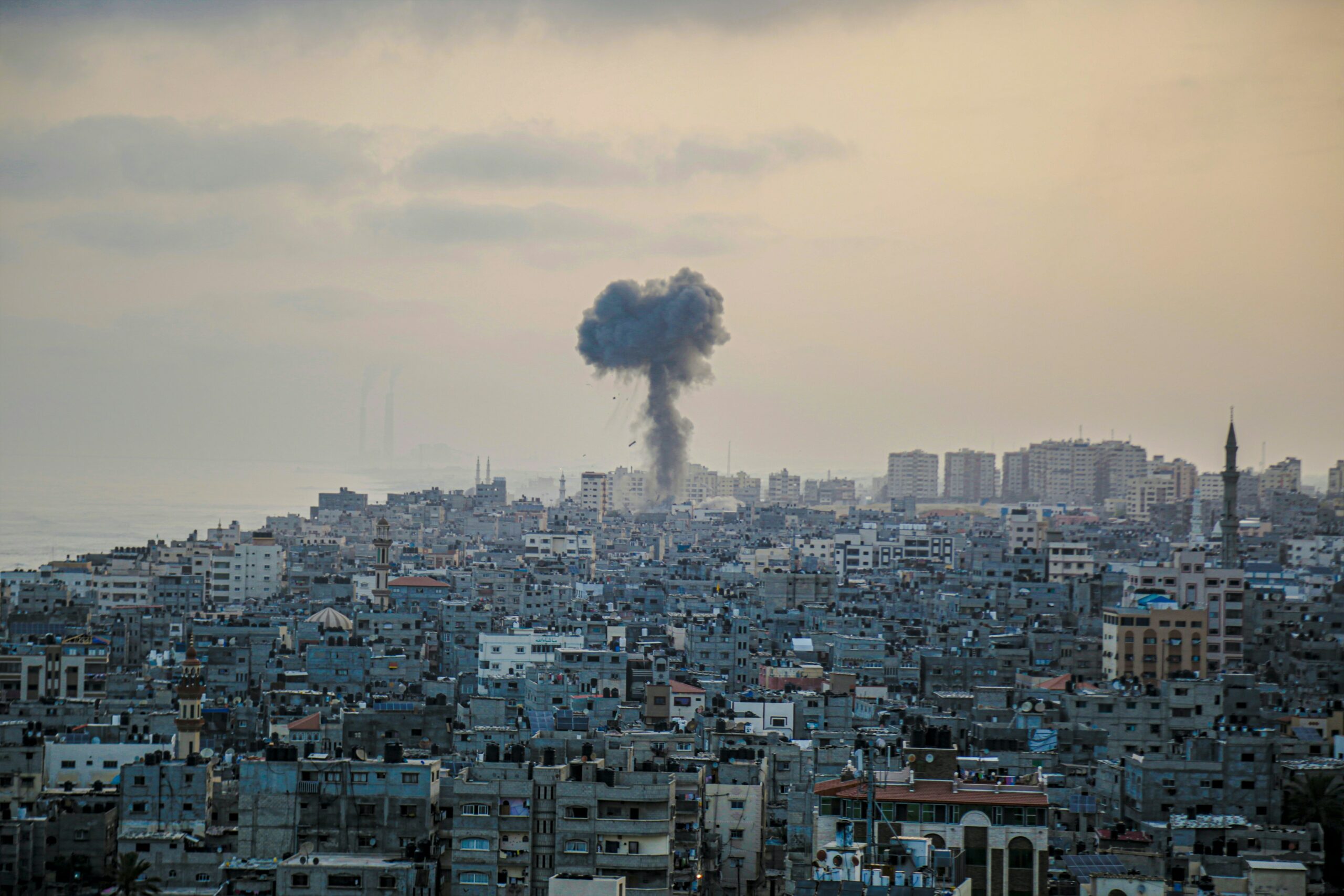
Gaza City, Gaza Strip – Nearly eight months into the latest conflict between Israel and Hamas, the human toll in the Gaza Strip has reached a staggering and deeply contentious milestone. As of late May 2024, the health ministry in Gaza, run by Hamas, reports that more than 36,000 Palestinians have been killed since the hostilities erupted on October 7. The figure, while unverifiable by independent sources, has become a focal point in the global debate over the war’s scale and legitimacy, prompting deep scrutiny from human rights organizations and governments alike.
The latest data from the ministry, released on Tuesday, indicates that 36,050 people have been killed and 81,000 wounded. The ministry’s count, which it updates daily, does not distinguish between civilians and combatants. However, it notes that approximately 70% of the dead are women and children. The United Nations, the World Health Organization, and the International Committee of the Red Cross have historically relied on these figures, calling them “credible and reliable” in previous conflicts.
A Disputed Toll
The veracity of the numbers is fiercely contested. Israeli officials argue the ministry is a political arm of Hamas and accused it of inflating civilian casualties to sway international opinion. Israel’s military says it has killed over 13,000 Hamas fighters during the ground operation. Yet, it has not provided a detailed breakdown to support that claim, and independent analysts have found the ministry’s methodology—collecting data from hospitals, morgues, and family reports—to be broadly consistent with past conflicts.
The breakdown of the toll is equally grim. Hamas-run authorities report that among the dead are at least 15,000 children, according to UNICEF estimates, and over 10,000 women. The sheer volume of casualties has overwhelmed Gaza’s decimated healthcare system. “We are no longer counting; we are estimating. The dead are buried in mass graves, in gardens, under rubble,” said Dr. Mariam al-Astal, a pediatrician at Al-Shifa Hospital, who lost her own home in the bombing.
Context in a Humanitarian Catastrophe
The numbers are set against a backdrop of staggering destruction. The United Nations reports that 75% of Gaza’s population has been displaced, with over a million people crammed into the southern city of Rafah. The war was triggered by Hamas’s October 7 attack, which killed 1,200 Israelis and saw 240 taken hostage, according to Israeli tallies.
The civilian toll has fueled accusations of genocide at the International Court of Justice, which Israel denies. The Biden administration, while supporting Israel’s right to defend itself, has expressed increasing alarm over the “unacceptable” loss of Palestinian life. “Every civilian death is a tragedy,” said White House spokesperson John Kirby in a press briefing, “but the raw numbers alone do not tell the full story of Hamas using human shields.”
The Challenge of Verification
Independent verification remains nearly impossible. The Israeli blockade prevents most foreign journalists from entering Gaza. The Palestinian Ministry of Health, however, has long published detailed records, including names, ID numbers, and cause of death—a data set that human rights groups like Amnesty International have used to cross-check. Recent analyses by The Lancet and the Journal of the American Medical Association have found the ministry’s casualty counts to be accurate within a 5% margin of error in prior wars.
A Wider Regional Toll
Beyond Gaza, violence has also surged in the West Bank, where Israeli forces and settlers have killed over 500 Palestinians since October, the highest number in two decades, according to the UN.
As ceasefire negotiations stall, the numbers continue to climb. For many Palestinians, the statistics are not abstract. “My son’s name is a number now. 23,874. That is who he is,” said Umm Khaled, a displaced mother from Gaza City, clutching a dusty identity card. “The world sees a statistic. I see my son.”
What Comes Next
The long-term implications are profound. The destruction of Gaza’s infrastructure has set back development by decades. Experts predict that the death toll will continue to rise as a famine, declared in parts of the territory by the UN, exacerbates mortality. “We are not just counting the dead from bombs,” said Dr. Ghassan Abu Sitta, a leading surgeon in Gaza. “We are now counting the dead from hunger, from dehydration, from diseases that we thought we had eliminated.”
For now, the 36,000 figure remains a cipher—a number that represents both a battlefield statistic and an unfathomable human tragedy, one that will define the region’s political landscape for a generation.