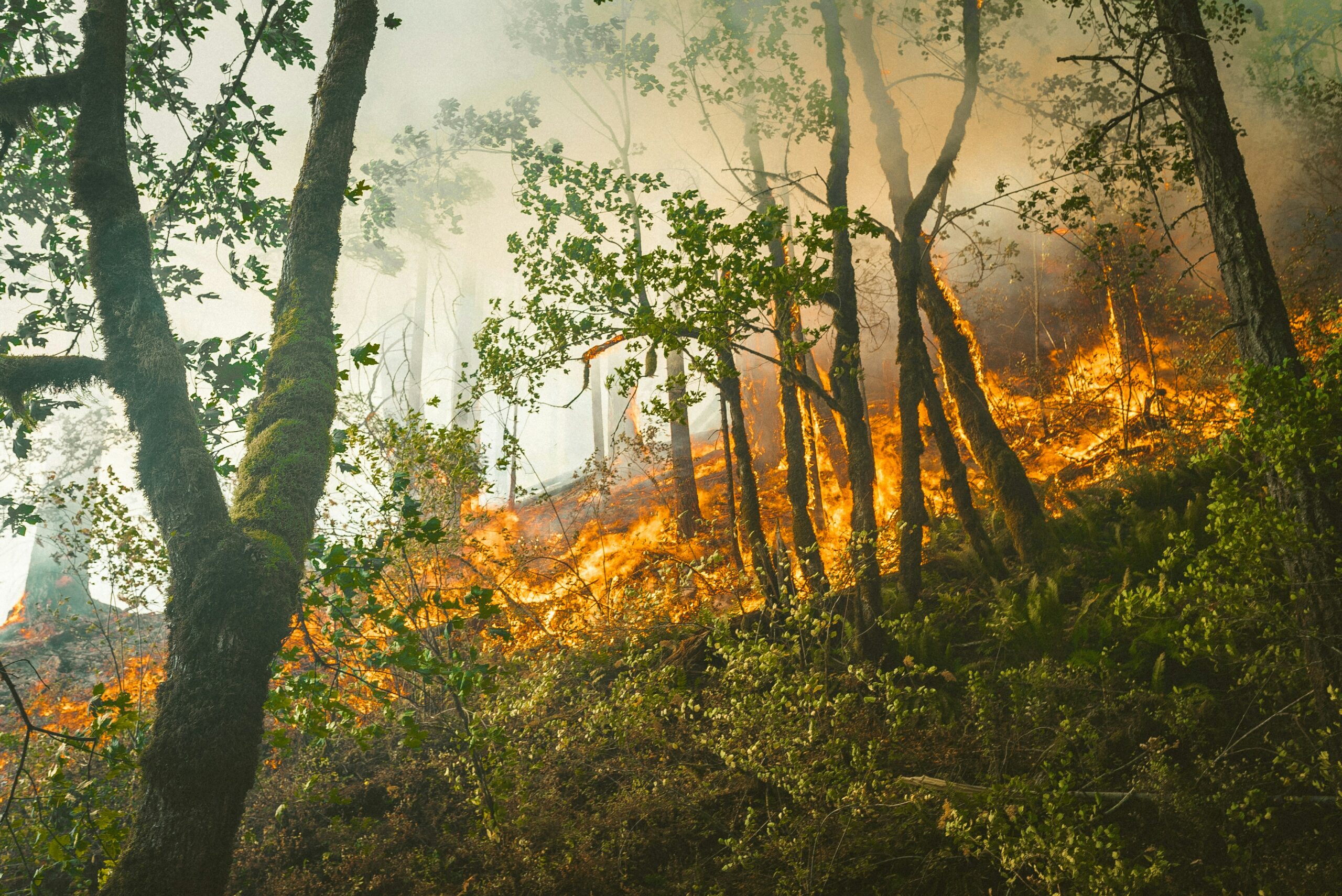
A relentless series of wildfires is sweeping through multiple states across the western United States, scorching hundreds of thousands of acres and forcing mass evacuations in California, Oregon, and Washington as firefighters battle extreme conditions fueled by drought and record-breaking heat.
The blazes, which erupted late last week and intensified over the weekend, have destroyed at least 150 structures and prompted evacuation orders affecting more than 50,000 residents, according to state emergency management officials. In California, the sprawling “Park Fire” in Butte and Tehama counties has consumed over 178,000 acres, making it one of the largest active fires in the nation. Oregon’s “Durkee Fire” near the Idaho border has burned through more than 80,000 acres of sagebrush and timber, while Washington’s “Retreat Fire” near Mount Rainier continues to threaten remote communities.
“We are facing a perfect storm of conditions: dry vegetation, historic drought, and temperatures exceeding 110 degrees in some areas,” said Dr. Elena Marquez, a wildfire scientist at the University of California, Davis. “This is not a normal fire season—these are the kinds of extremes we expect to see more frequently as the climate warms.”
The National Interagency Fire Center reports that over 60 large fires are currently burning across the West, with containment levels ranging from zero to 30 percent. Nearly 20,000 fire personnel have been deployed, supported by 400 aircraft and thousands of pieces of heavy equipment. The U.S. Forest Service has mobilized additional resources from as far as the East Coast.
Human factors are also at play. The Park Fire is believed to have been sparked by a man pushing a burning car into a ravine, authorities said on Monday. The suspect was arrested and faces arson charges. In Oregon, the Durkee Fire was ignited by lightning strikes, underscoring the dual threats of human carelessness and natural ignition sources.
A Region on Edge
Residents describe scenes of eerie orange skies and falling ash as they fled their homes. In the small town of Cohasset, California, retiree Margaret Flores, 72, packed only photographs and medication before evacuating. “You think you have time, and then the wind shifts and you’re grabbing your cat and running,” she said by phone from a Red Cross shelter in Chico.
Air quality has deteriorated across the region. The Environmental Protection Agency has issued hazardous air alerts for dozens of counties, advising residents—especially children and those with respiratory conditions—to stay indoors. In Portland, Oregon, the Air Quality Index spiked to 275, classified as “very unhealthy.”
Long-Term Trends and Policy Implications
Wildfire seasons have lengthened and intensified across the West over the past two decades. According to the National Oceanic and Atmospheric Administration (NOAA), the average annual area burned by wildfires in the U.S. has more than doubled compared to the 1990s. Scientists attribute the trend to a warming climate that dries out forests and extends the fire season by several months each year.
Federal land management agencies have faced criticism for insufficient controlled burns and forest thinning, which can reduce fuel loads. The Biden administration earlier this year announced $1.6 billion in funding for wildfire resilience projects, but experts say implementation remains slow. “We need to invest in pre-season mitigation, not just emergency response,” said Dr. Marquez. “Every dollar spent on prevention saves four dollars in firefighting costs downstream.”
What Comes Next
Forecasters warn of little relief. The National Weather Service predicts continued hot, dry, and windy conditions through mid-week, with red flag warnings in effect from Northern California to Montana. Fire officials expect containment of major blazes to take weeks or longer.
For affected communities, the road to recovery will be long. FEMA has authorized federal disaster assistance for several counties, and state officials are urging residents to heed evacuation warnings immediately. Resources such as real-time air quality monitoring, evacuation zone maps, and fire tracking via the app “Watch Duty” are available for those in impacted areas.
As flames continue to consume forests and homes, the crisis serves as a stark reminder: the new normal demands not just better preparedness—but a reckoning with the climate forces amplifying these infernos.