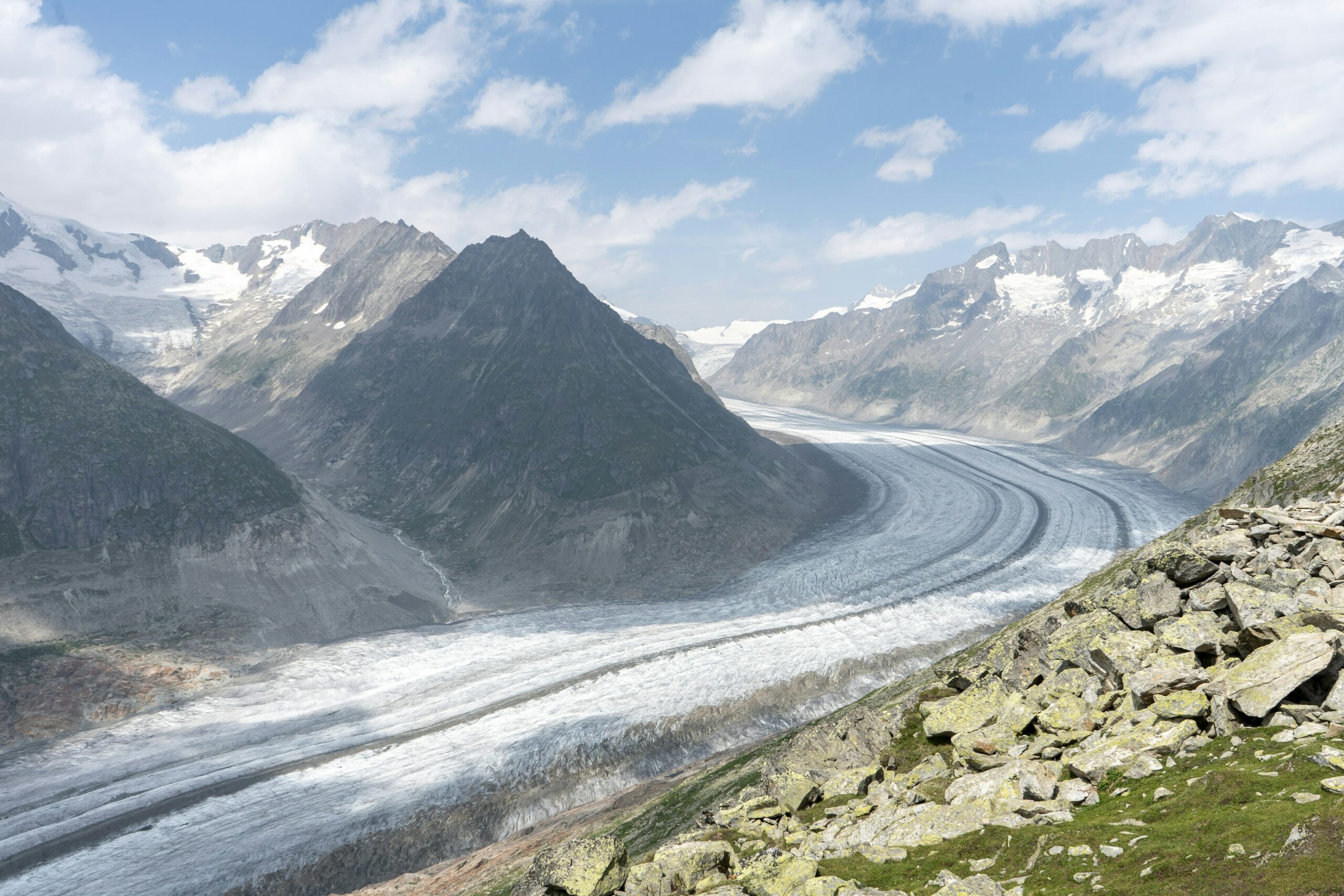
Geneva, Switzerland – High in the Swiss Alps, a team of glaciologists is engaged in a desperate race against time. They are drilling deep into the heart of an ancient glacier, not just to study the ice, but to recover a unique archive of Earth’s climatic history before it melts away forever.
The project, a collaboration between the University of Geneva and the European Ice Core Consortium, targets a glacier that has remained frozen for over 10,000 years. These ice cores, extracted from the Colle Gnifetti summit, act as natural time capsules. Each layer of ice contains trapped air bubbles, volcanic ash, and chemical isotopes that reveal past temperatures, atmospheric composition, and even major historical events like volcanic eruptions or shifts in solar activity.
“We are literally losing our library of climate data,” said Dr. Elena Voss, the project’s lead scientist, her breath visible in the thin, cold air. “Every year that passes, the oldest ice layers warm and trickle away as meltwater. We have a narrow window—maybe a decade—to collect the best records before the climate signal degrades beyond recognition.”
The urgency stems from a phenomenon scientists call “the warm spike.” Unlike Greenland or Antarctica, alpine glaciers at lower latitudes are far more vulnerable to rising global temperatures. Data from the World Glacier Monitoring Service indicates that Swiss glaciers have lost nearly 10% of their volume in just the last two years. This rapid melt is not only shrinking water supplies for millions downstream but also erasing irreplaceable scientific data.
Drilling operations are meticulous and painstaking. Crews use a sterilized, heated drill to extract three-meter-long cylinders of ice. Each core is immediately bagged, frozen, and flown by helicopter to a refrigerated laboratory in Bern. There, researchers analyze the layers using laser ablation and mass spectrometry, techniques so precise they can detect pollution from Roman-era smelting or the radioactive fallout from nuclear tests.
The implications of this work extend beyond pure academia. Historical ice records provide baseline data crucial for refining climate models. Without them, predictions for future sea-level rise, drought frequency, and monsoon patterns become less accurate. “If we don’t know how hot the Earth got naturally, we can’t measure how much we are changing it artificially,” Dr. Voss explained.
The team has already recovered cores dating back 12,000 years, but the deepest layers—those from the last Ice Age—are now at risk. Meltwater has percolated downward, contaminating the pristine bubbles. In some spots, the ice has turned slushy, turning solid history into liquid uncertainty.
What This Means for the Public
For policymakers, the message is stark. As glaciers retreat, they take with them the only physical record of pre-industrial climate. The United Nations has called for an accelerated global effort to archive ice cores, similar to the Svalbard Global Seed Vault, which preserves seeds for future generations.
For ordinary citizens, the melting ice is a visible symbol of accelerating change. Ski resorts are closing, summer water shortages are becoming routine, and the iconic alpine landscape is transforming. The loss of the ice itself is a loss of memory.
Next Steps
The Geneva team plans to complete its deep drilling campaign within the next two field seasons. After that, they will shift focus to analyzing the cores and publishing a comprehensive database open to researchers worldwide. Meanwhile, conservation groups are lobbying for designated “climate heritage” sites to protect the remaining records.
In a warming world, the story told by ice—of ice ages, droughts, and ancient civilizations—may soon be silenced. The scientists at Colle Gnifetti are doing everything they can to ensure its final chapter is written before the last page melts away.