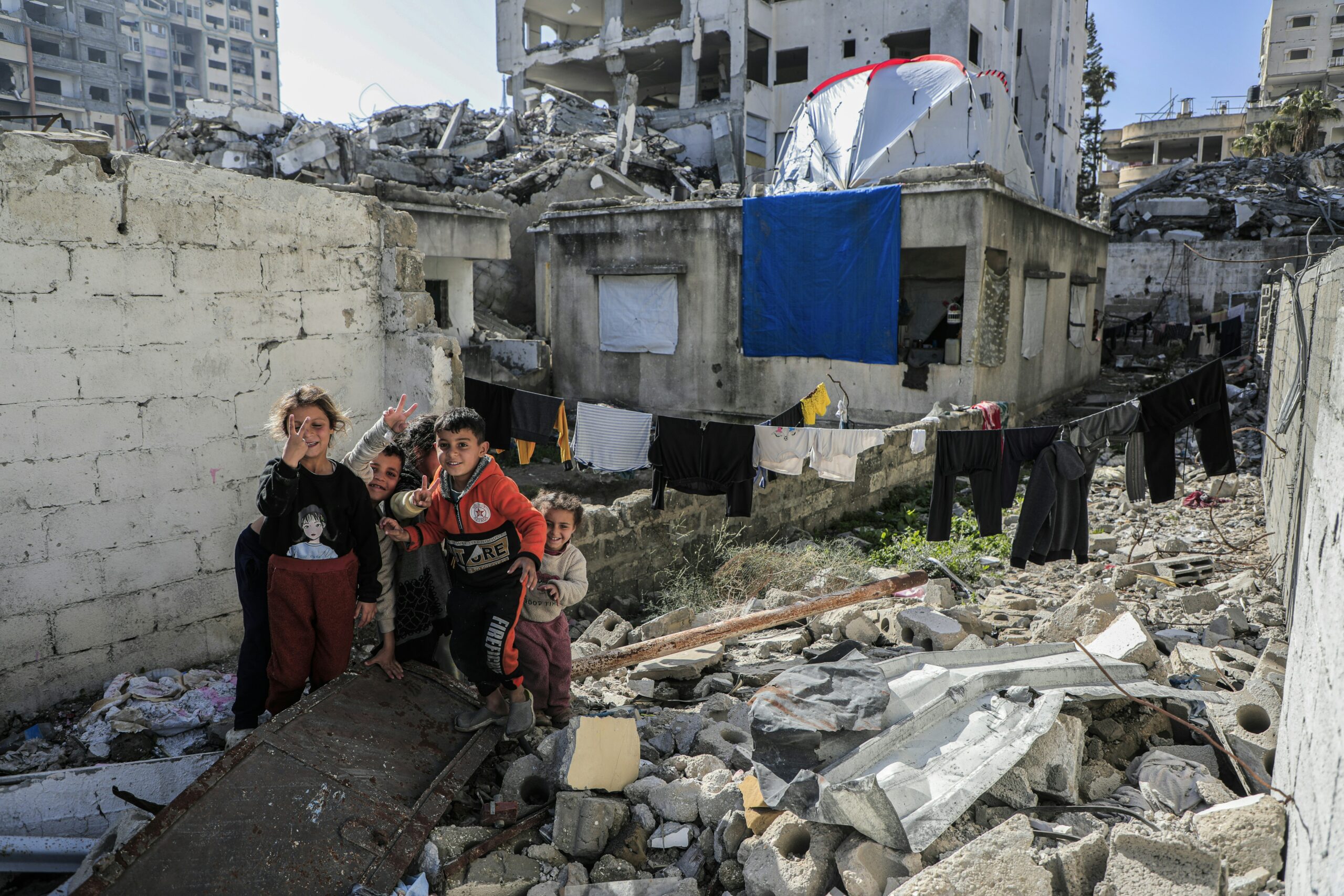
Gaza City, occupied Palestinian territories – For the hundreds of thousands of children who have endured more than a year of relentless bombardment, displacement, and deprivation, the wounds of war run far deeper than what is visible. Pediatricians and humanitarian aid workers are now warning of a silent crisis: a generation grappling with severe developmental delays, acute malnutrition, and profound psychological trauma that could shape their futures—and the region—for decades.
The World Health Organization reports that over 1.1 million children in Gaza require urgent mental health and psychosocial support. This figure represents roughly half of the territory’s total population under 18. For many, the constant state of fear has disrupted fundamental milestones. “We are seeing toddlers who have stopped speaking, infants who cannot maintain eye contact, and school-aged children who have completely regressed in motor skills,” said Dr. Mariam al-Husseini, a pediatric neurologist working with Doctors Without Borders in Deir al-Balah. “This is not merely post-traumatic stress. This is a developmental emergency.”
A Crisis Measured in Kilograms and Months
The link between malnutrition and brain development is well-established, and Gaza’s current trajectory is alarming. According to the Integrated Food Security Phase Classification (IPC), more than 495,000 people in Gaza are experiencing catastrophic levels of food insecurity—the most severe classification. Without adequate protein, calories, and micronutrients like iron and iodine, children under five are particularly vulnerable to stunting (low height for age) and wasting (low weight for height), both of which can cause irreversible cognitive damage.
“A child who is severely malnourished in the first 1,000 days of life loses up to 10 IQ points on average,” explained Dr. Raj Patel, a professor of global nutrition at the London School of Hygiene and Tropical Medicine. “That child will never fully recoup that loss. In Gaza, we are seeing entire cohorts of children entering a critical window of development without the basic fuel their brains require.”
The collapse of Gaza’s healthcare system compounds the problem. The United Nations reports that only 13 of the territory’s 36 hospitals are partially functioning. Access to clean water—essential for preparing infant formula and preventing diarrhea, which worsens malnutrition—has plummeted. The UN Children’s Fund (UNICEF) notes that more than 85% of households do not have reliable access to safe drinking water.
The Invisible Scars of ‘Shock and Noise’
Beyond biology, the environment of war is fundamentally hostile to a child’s developing psyche. Many children have been displaced multiple times, separated from parents, or witnessed the destruction of their homes and schools. Hypervigilance, sleep disorders, and aggressive or withdrawn behavior are now common presentations in the few operating clinics.
“Children need safety, routine, and play. Gaza provides none of those things,” said Yara Said, a child protection specialist with Save the Children who was recently in Rafah. “I met a five-year-old boy who couldn’t stop shaking when he heard a generator start. He associated any loud noise with an airstrike. That level of arousal is toxic to a young brain.”
In the absence of a formal ceasefire, humanitarian agencies are scrambling to implement “safe spaces” —tented areas where children can engage in structured play and receive basic psychosocial first aid. But these interventions, while crucial, are a drop in the bucket. The UN has appealed for $2.8 billion to meet the humanitarian needs of 3.1 million people in Gaza and the West Bank in 2024, but funding remains severely under-resourced.
The Long Road Ahead
The implications extend far beyond individual health. A generation of children with learning deficits, poor emotional regulation, and weakened immune systems will strain an already shattered educational system and health infrastructure. Rehabilitation will likely require a coordinated international effort spanning at least a decade, involving everything from nutritional supplementation to trauma-informed education.
For Dr. al-Husseini, the most painful part is the uncertainty. “Every day I ask myself: what is the future for these children? We are trying to stabilize them today, but we are fighting with our hands tied. The world must understand—time is not on their side. Their brains are developing right now, under fire, in the dark, on empty stomachs. That is a reality we cannot afford to ignore.”
Related reading: For those wishing to support, UNICEF and the World Food Programme are actively working on the ground in Gaza. The WHO’s emergency portal provides the latest health bulletins.