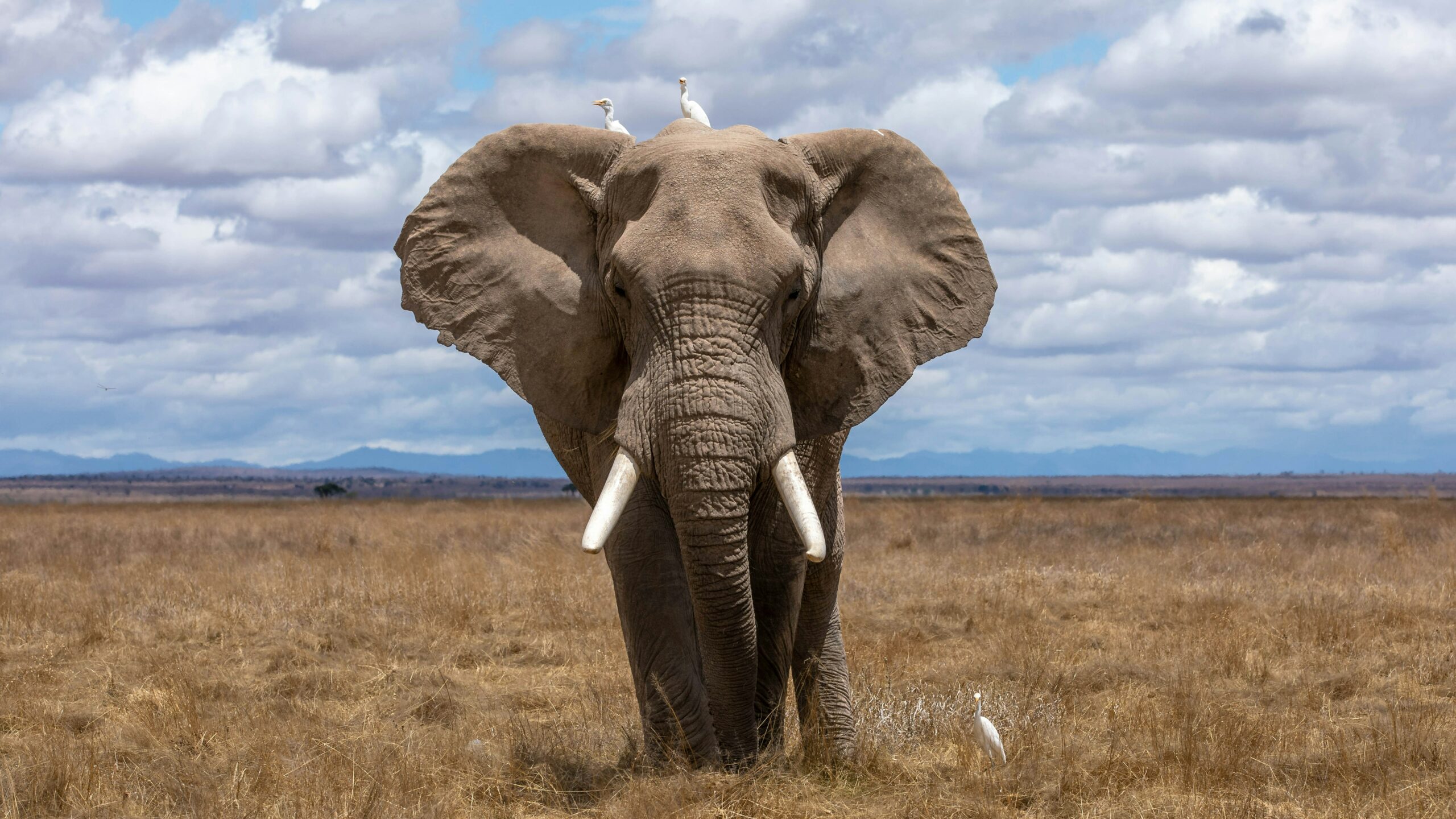
Conservation researchers have discovered that African elephants use specific, individual vocal labels to address one another, a rare form of communication previously thought to be unique to humans and some dolphins.
In a groundbreaking study published this week in Nature Ecology & Evolution, an international team of biologists confirmed that wild African savannah elephants (Loxodonta africana) produce distinct, name-like calls to identify and summon specific members of their herd. The research, conducted over four years across two protected areas in Kenya—Amboseli National Park and Samburu National Reserve—reveals a level of social complexity in non-human animals that scientists say could transform our understanding of animal intelligence and conservation strategies.
How the Discovery Was Made
The study, led by Dr. Michael Pardo of Colorado State University in collaboration with Save the Elephants and Amboseli Trust for Elephants, analyzed more than 600 recorded vocalizations from female elephants and their young. Using machine learning algorithms, the team identified that certain low-frequency rumbles—often inaudible to the human ear—contained acoustic signatures unique to the intended recipient.
When researchers played back these recorded calls to the herds, they observed a striking pattern: the specific elephant being “named” would respond by lifting its head, flapping its ears, or vocalizing in return, while other elephants in the group largely ignored the sound. “This isn’t just a generic contact call,” said Dr. Pardo in a press briefing. “The data suggests elephants are capable of abstract labeling of individuals, a cognitive feat once considered uniquely human.”
Why Individual Names Matter in the Wild
The ability to use individual vocal labels is critical for highly social, matriarchal elephant societies, where herds may range between 8 and 100 individuals. Mothers and calves, in particular, often become separated in dense bush or during long migrations. The discovery explains how elephants maintain cohesion across vast distances—sometimes spanning several kilometers—without relying solely on visual cues.
Previous research had shown that elephants can recognize the voices of dozens of relatives and can distinguish between humans based on ethnic group and even individual danger levels. This new finding, however, confirms that their communication system is more flexible and intentional than previously understood. “It’s like a call-and-response system with a specific address built in,” explained Dr. Joyce Poole, a co-author of the study and co-founder of ElephantVoices. “The elephant isn’t just yelling, ‘Hello, anyone there?’ It’s saying, ‘Hello, Margaret. I need you.’”
Implications for Conservation and Human–Wildlife Conflict
This revelation carries urgent practical implications. Human–elephant conflict remains one of the leading threats to the species, with over 400 elephants killed annually in Africa due to crop raiding, property damage, and retaliatory killings. Engineers and conservationists have long experimented with alarms, fences, and deterrents. If scientists can decode the specific calls elephants use to warn of danger or coordinate movement, it may become possible to design non-lethal acoustic deterrents that use natural elephant signals to steer herds away from farms and villages.
“Knowing they have a name-based social structure also changes how we approach habitat fragmentation,” said Dr. George Wittemyer, a senior author from Save the Elephants. “If we disrupt their social networks by cutting migration corridors, we may be severing a named line of communication that is essential to survival.”
What Comes Next
The research team plans to expand the study to forest elephants in Central Africa, whose vocalizations are less understood. They are also exploring whether male elephants, which tend to be more solitary, use similar naming calls—or have a different communication system entirely.
For now, the findings offer a rare, humbling glimpse into the inner world of one of Earth’s most intelligent creatures. As ecologist Dr. Susan Alberts of Duke University noted in a commentary accompanying the study: “This work bridges a gap between animal behavior and linguistics. It asks us not just how elephants communicate, but what they might be saying about each other—and about us.”