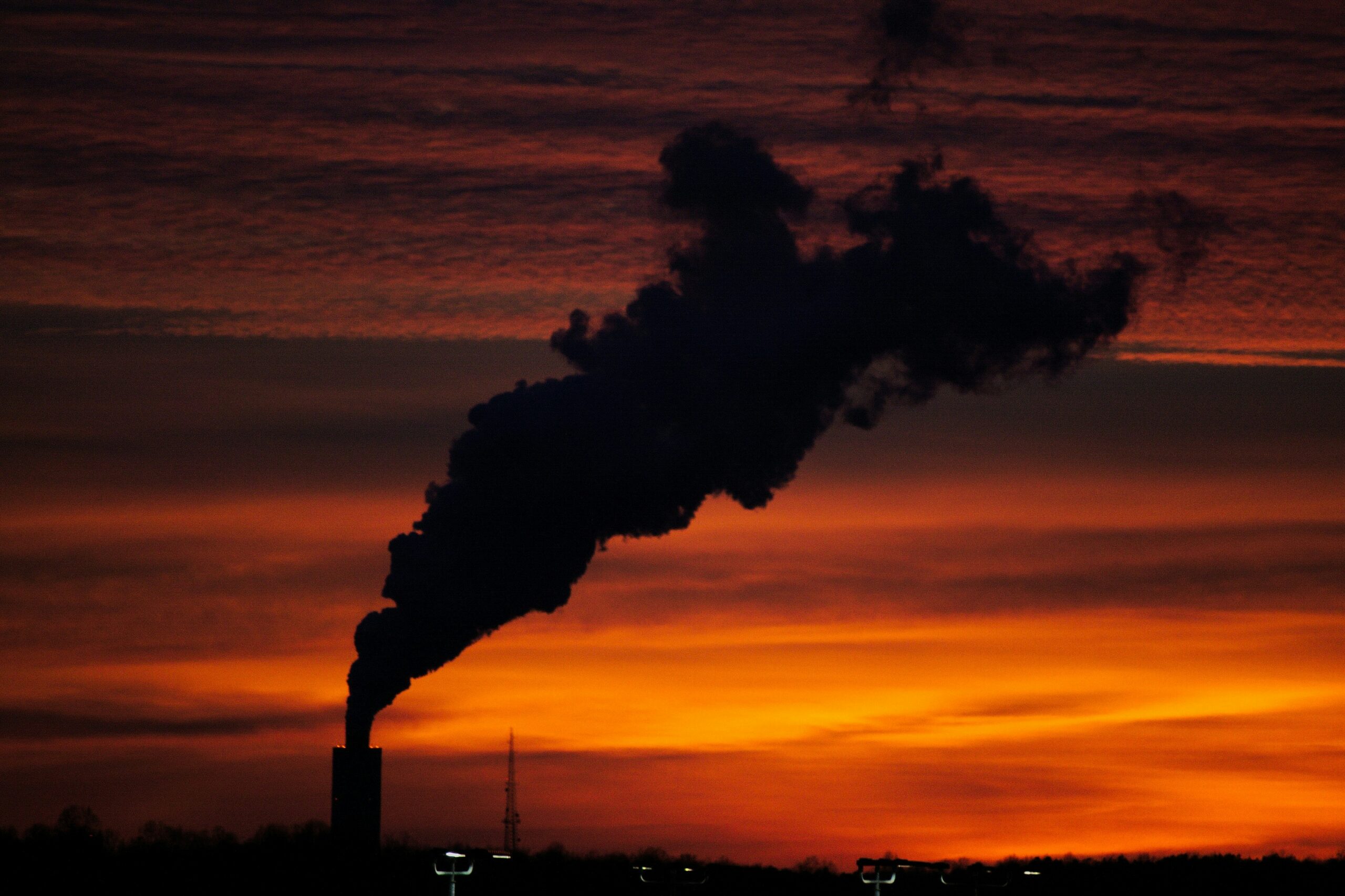
The world is grappling with a concerning new milestone as atmospheric concentrations of key greenhouse gasses, particularly carbon dioxide ($\text{CO}_2$), have surged to levels not seen in recorded history, new data from leading international scientific bodies confirms. This worrying escalation, driven primarily by the sustained burning of fossil fuels and significant deforestation, underscores the widening gap between global climate action pledges and the reality of emissions trajectories, demanding urgent policy and industrial recalibration to avert the most severe consequences of climate change.
Surging $\text{CO}_2$ Levels Break Historical Records
In-depth analyses utilizing datasets from governmental meteorological agencies and independent research institutes paint a stark picture: the average global $\text{CO}2$ concentration has surpassed a critical benchmark, setting a new all-time high. This increase is profoundly concerning because $\text{CO}2$ is the most significant long-lived greenhouse gas, acting as a blanket that traps heat in the Earth’s atmosphere. Scientists emphasize that these aren’t merely annual fluctuations but represent a consistent, upward trend accelerating since the onset of the Industrial Revolution.
The primary culprits remain unchanged: the continued reliance on coal, oil, and gas for energy generation, industry, and transportation. Furthermore, the systematic conversion of carbon-absorbing natural ecosystems, specifically vast forests and peatlands, into agricultural or commercial land significantly reduces the planet’s ability to naturally sequester atmospheric carbon, creating a dual challenge for climate stability.
Experts caution that the current rate of increase indicates that net-zero targets established by nations under agreements like the Paris Accord are not being met quickly enough. Without immediate and dramatic reductions in emissions, the internationally agreed-upon goal of limiting global warming to $1.5^\circ\text{C}$ above pre-industrial levels is becoming increasingly tenuous.
The Role of Other Potent Gases
While carbon dioxide receives the most attention, the data also highlights troubling rises in other potent greenhouse gasses, notably methane ($\text{CH}4$) and nitrous oxide ($\text{N}2\text{O}$). Methane, released primarily through agricultural practices (such as livestock farming), fossil fuel extraction, and decaying waste, possesses a much higher heat-trapping potential than $\text{CO}_2$ over a shorter timeframe, making its rapid increase particularly impactful on near-term warming. Nitrous oxide, linked to fertilizer use and industrial processes, is also escalating, further compounding the warming effect.
These concurrent increases suggest that climate challenges require a comprehensive strategy extending beyond the energy transition, incorporating reforms in agriculture, waste management, and industrial efficiency.
Implications for Climate and Society
The consequences of these high greenhouse gas concentrations are already manifesting globally. Leading scientific reports consistently link elevated atmospheric concentrations to shifts in weather patterns, resulting in more frequent and intense heatwaves, prolonged droughts, and catastrophic flooding events. Melting ice caps and glaciers continue to contribute to rising sea levels, threatening coastal communities and vital infrastructure across the globe.
According to climate modeling, sustained high emission levels guarantee a feedback loop where warming accelerates natural releases of carbon, for example, from thawing permafrost, making future climate control exponentially harder.
Pathways to Meaningful Reduction
Reversing this trajectory demands accelerated global cooperation and decisive domestic policy action. Key pathways identified by climate analysts include:
- Rapid Decarbonisation of the Energy Sector: Phasing out coal-fired power plants and prioritizing investments in utility-scale solar, wind, and geothermal energy sources.
- Methane Reduction Strategies: Implementing stricter regulations on venting and flaring in the oil and gas industry and promoting sustainable livestock feed and waste management practices.
- Scaling Up Carbon Sinks: Protecting and restoring vital natural ecosystems, including tropical forests, mangroves, and oceanic blue carbon habitats, which naturally absorb and store $\text{CO}_2$.
- Innovation and Efficiency: Investing in carbon capture technologies and improving energy efficiency across all economic sectors.
The scientific community’s latest findings serve as a resounding call for policymakers and industrial leaders to translate ambitious climate pledges into meaningful, measurable reductions in emissions this decade if the world hopes to stabilize the climate system before critical tipping points are breached.