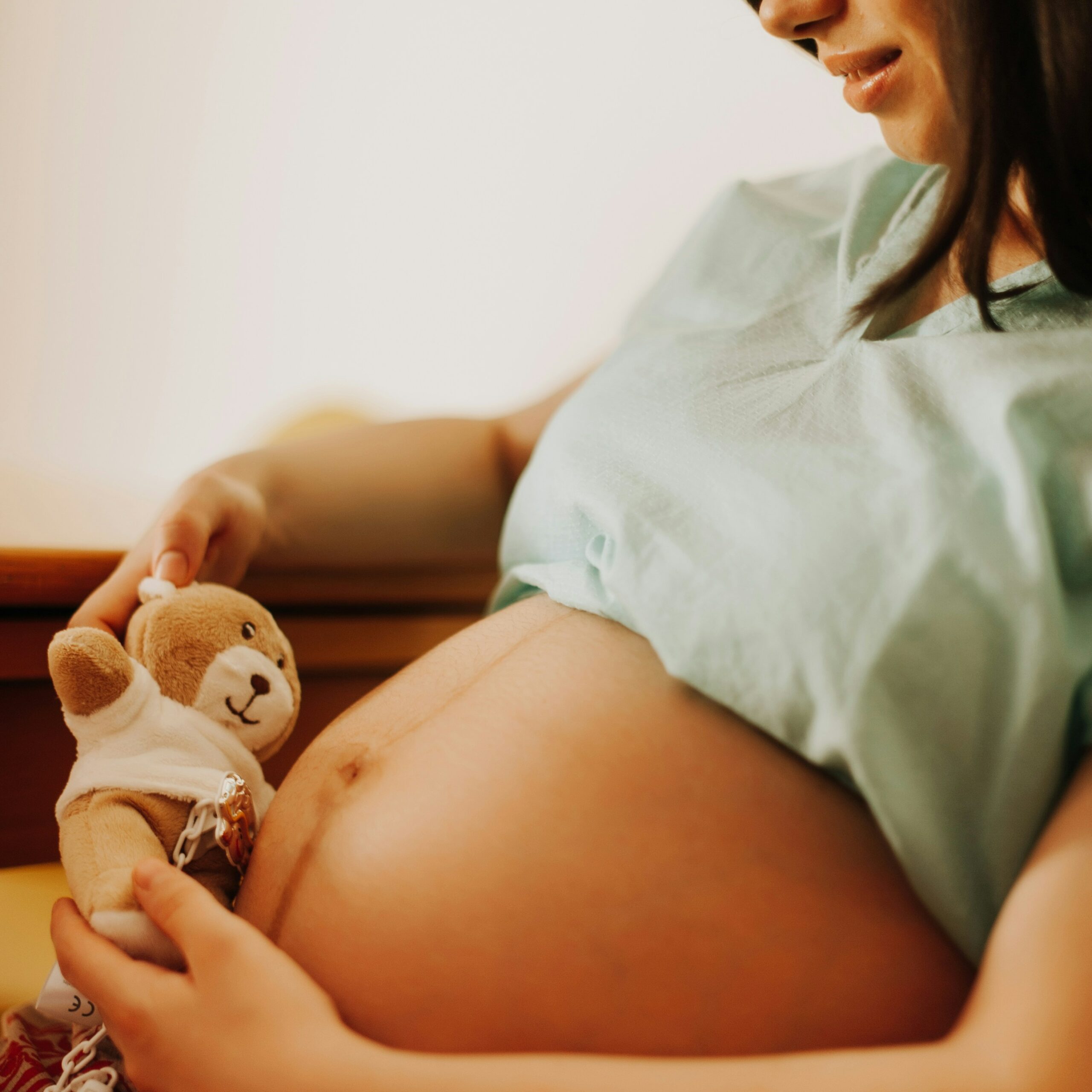
Former entertainment personality Joan Lee (利穎怡), widely known as the “Goddess of East Watch,” recently detailed the harrowing and unpredictable journey to becoming a first-time mother in October, culminating in an extensive, high-risk “full course” labor that transitioned from intended natural delivery to an urgent Cesarean section. Lee, who was diagnosed with uterine adenomyosis, chronicled the complex, nine-month medical challenge on social media, highlighting the inherent risks posed by a large, seven-centimeter adenomyoma that initially threatened miscarriage and complicated the baby’s positioning throughout the pregnancy.
Navigating a High-Risk Pregnancy
The presence of the significant uterine mass initially led medical professionals to determine that a natural birth was impossible, mandating a planned C-section at a public hospital due to the elevated care requirements—a case many private practitioners reportedly declined to manage. This diagnosis stemmed from the severe limitation the tumor placed on fetal movement, specifically the ability of the baby to orient into the correct head-down position.
Despite the initial grim prognosis, Lee described a remarkable, unexpected development late in the third trimester. “My baby executed a maneuver that doctors said couldn’t happen,” she explained, detailing how her son spontaneously repositioned himself correctly. This turning point provided the family with a glimmer of hope, leading to the decision to attempt a vaginal birth.
The Unexpected Twist: Emergency Surgery
The shift in delivery plans proved short-lived and dramatically intensified the labor experience. During active delivery, the baby encountered acute distress. Monitors revealed an unstable heart rate (arrhythmia), compounded by the umbilical cord tightly wrapped twice around the newborn’s neck. These life-threatening complications necessitated an immediate, emergency surgical intervention to safely deliver the baby boy, whom Lee affectionately refers to as “Young Master Kuan.”
Recounting the experience, Lee emphasized the emotional intensity of signing critical documents at the public hospital, transforming the ordeal into a “life-and-death pact” with her unborn child. “Private doctors signaled a likely defeat,” she noted, referencing the initial certainty of surgical delivery due to the tumor. “When doctors suggested we ‘try for a natural birth,’ we won the first battle. But he was too playful inside,” she recounted, describing the baby’s cord entanglement. “We won the second battle by transitioning swiftly back to a C-section, albeit with great alarm.”
The Resilience of Life
Lee reflects on the intense experience as a profound lesson in tenacity. Now celebrating nearly two months with her son, she characterizes the delivery as a “roller coaster ride” that fundamentally altered her perspective on biomedical certainty.
“This taught me: the resilience of life far surpasses any diagnosis,” Lee concluded. She credits her son—her “little negotiator”—for demonstrating an innate strength that defied complex clinical predictions.
This personal story sheds light on the critical role of public healthcare services in managing high-risk maternal cases where private facilities may deem the complexity too great. It also serves as a poignant reminder that while medical diagnoses provide essential guidelines, the human body and the natural process of delivery frequently introduce unpredictable variables that demand rapid, collaborative medical response.